Michelin Star Restaurants in Tokyo
Tokyo holds more Michelin stars than any other city on earth, and it shows in the strangest places. A ten-seat sushi counter tucked under a Ginza office block can matter as much as a grand French dining room, and a bowl of noodles can sit a few doors from a three-star kaiseki temple. The Michelin star restaurants in Tokyo are not one scene but dozens of them, each with its own rules, its own rhythm, and its own idea of what a perfect meal looks like.
This guide sticks to the names that keep coming up again and again: the counters chefs fly in to eat at, the kaiseki rooms that book out weeks ahead, and the French and Chinese dining rooms that have held their stars for years. Every place below is real, famous, and worth the effort it takes to get a seat. Some will cost you a small fortune. All of them will give you a story you will still be telling years later.
How We Picked These Restaurants
We started with the Michelin Guide itself, then checked each name against what chefs, critics, and regular diners actually say. A star gets a restaurant on the long list, but it does not guarantee a place here. We wanted rooms that stay great year after year, not ones riding a single good season, and we weighed the food against the whole experience: the welcome, the pace, the room, and whether the bill felt honest at the end.
- Reputation: Long-standing names that chefs and guides keep recommending, not one-season wonders.
- Food quality: Cooking that is precise, seasonal, and unmistakably the chef’s own.
- Consistency: The same care on a quiet Tuesday as on a packed Saturday night.
- What real diners say: Repeated praise for named dishes, balanced with honest notes on booking, prices, and house rules.
The List: Michelin Star Restaurants in Tokyo
Sukiyabashi Jiro — Ginza, Tokyo
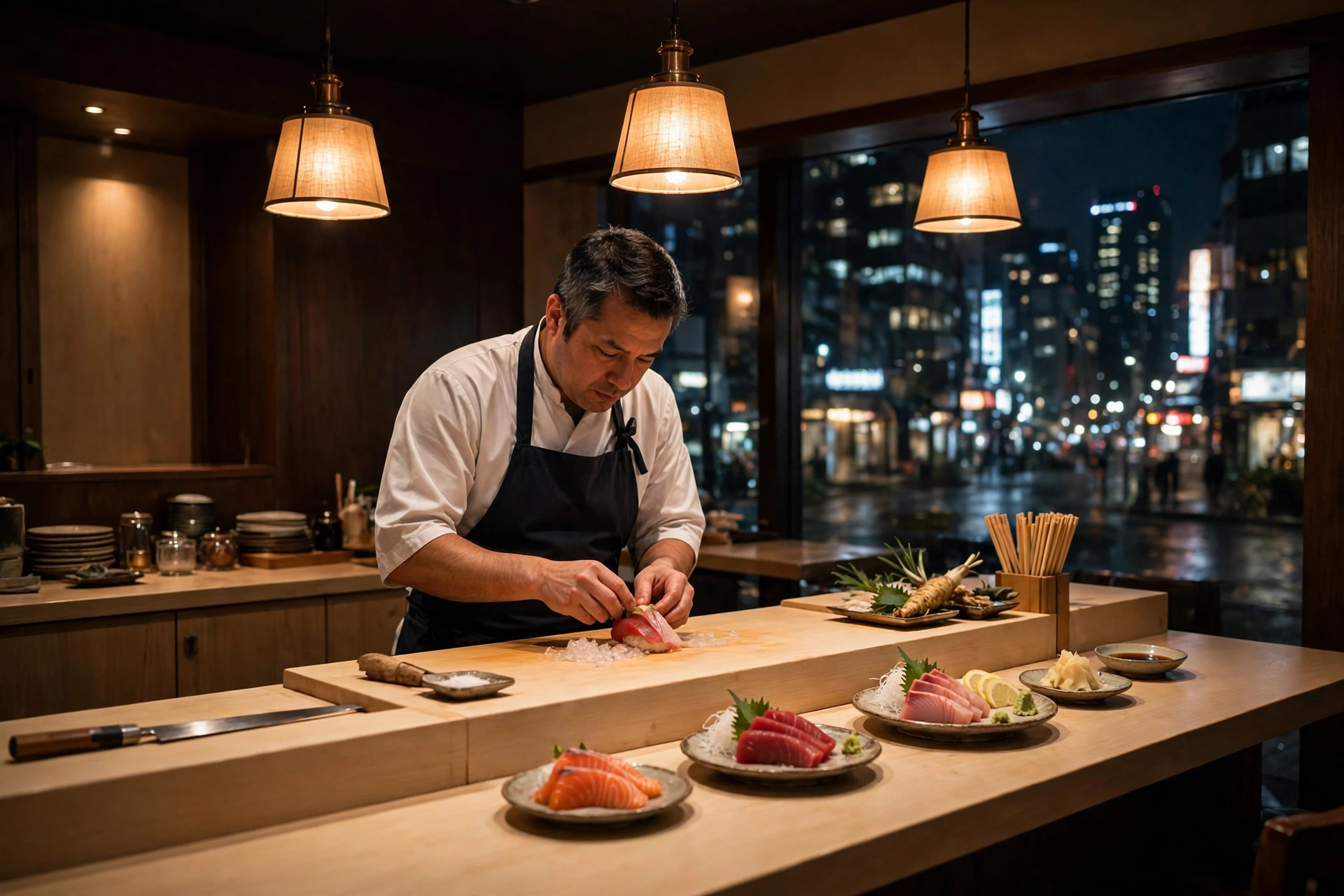
Jiro Ono’s ten-seat counter is probably the most famous sushi bar in the world, and the room does nothing to advertise the fact. There is no sign outside, no menu, no small talk, and no lingering: you sit, the sushi comes piece by piece, and in about half an hour it is over. Jiro held three Michelin stars for years, and the fish is still handled with a level of care that other chefs travel across the world to study. The rice is warm, the wasabi is fresh, and each piece is shaped in seconds. Book through your hotel concierge well ahead, arrive on time, and do not wear perfume. The meal is short, strict, and unforgettable.
Best for: The purest sushi counter experience on earth
Narisawa — Minato, Tokyo
Yoshihiro Narisawa cooks what he calls Satoyama cuisine, food rooted in Japan’s forests, fields, and coasts, and the dining room feels calm enough to let it breathe. The meal moves through the seasons with dishes that change constantly, and the famous “Bread of the Forest,” baked at the table in a stone pot, still gets a reaction from first-timers every night. Narisawa has held two Michelin stars for years and sits on most lists of the world’s great restaurants. It is gentler than the famous counters, and that is the point: this is fine dining that wants you to relax, not perform.
Best for: Seasonal Japanese cooking with a story behind it
Quintessence — Shinagawa, Tokyo
Shuzo Kishida’s French restaurant is one of the hardest tables in Tokyo to book, and one of the easiest to understand once you are in the room. There is a single menu, no choices, and the kitchen works through it with quiet confidence. Kishida trained in France and cooks French food that still tastes like Japan: precise sauces, immaculate seasonal produce, and a lightness that keeps rich dishes from ever feeling heavy. Quintessence has held three Michelin stars for years. The room is small and plain, which only sharpens the focus on the plate. Ask your hotel to book the moment reservations open.
Best for: A single perfect French menu, no decisions needed
Sushi Saito — Roppongi, Tokyo
Takashi Saito is often named by other sushi chefs as the best in the business, and his eight-seat counter in Roppongi is the proof. The room is spare, the pace is brisk, and the fish is extraordinary: tuna aged to just the right point, shellfish cut with a surgeon’s care, and rice seasoned so the vinegar never shouts over the fish. Saito has held three Michelin stars for years. Seats are notoriously hard to get, and the regulars book their next visit before they leave. If you land a seat, eat each piece the moment it is set down, in one bite, and do not ask for extra wasabi.
Best for: Sushi at its most precise and uncompromising
Den — Jimbocho, Tokyo
Zaiyu Hasegawa’s kaiseki is the playful one, and that is exactly why people love it. Den takes the formal structure of kaiseki and fills it with jokes: a salad served in a garden, fried chicken that arrives like a picnic, and dishes that make the whole room smile. Underneath the fun, the cooking is serious. Den has held two Michelin stars and sits high on the world’s best lists, and Hasegawa’s warmth is part of the experience. The counter seats are the ones to ask for, close enough to watch the kitchen work. Book well ahead, and go hungry: the courses keep coming long after you think you are done.
Best for: Kaiseki that does not take itself too seriously
Ishikawa — Kagurazaka, Tokyo
Hideki Ishikawa’s kaiseki room in Kagurazaka is quiet, dark-wooded, and deeply traditional, the kind of place where the seasons are announced by what is on the plate. The meal follows the classic kaiseki shape: a small cup to open, sashimi, a simmered dish, grilled fish, rice, and something sweet to close. Nothing is showy, and that is the skill. Ishikawa has held three Michelin stars for years, and the kitchen’s restraint is what regulars come back for. The counter is the best seat in the house. Dress smartly, speak softly, and let the courses set the pace of the evening.
Best for: Classic kaiseki done with total calm
L’Effervescence — Nishi-Azabu, Tokyo
Shinobu Namae cooks French food with a Japanese soul, and L’Effervescence is where the two traditions meet most gracefully. The dining room is airy and modern, the service is warm, and the menu leans on vegetables, herbs, and fermentation in ways that feel both French and very much of Tokyo. Namae is known for dishes that celebrate a single ingredient, and for a kitchen that thinks hard about where everything comes from. The restaurant has held three Michelin stars. It is one of the most welcoming rooms on this list, and a good first step into Tokyo’s top tier if the stricter counters feel like too much.
Best for: French-Japanese cooking in a relaxed, modern room
Kanda — Minato, Tokyo
Hiroyuki Kanda’s counter is one of Tokyo’s quiet legends. The room seats only a handful of guests, the menu is a single tasting course, and the cooking blends Japanese technique with French structure in a way that feels effortless. Kanda has held three Michelin stars for years, yet the restaurant keeps a low profile: no website fanfare, no fuss, just a chef and his kitchen working at the top of their game. The food is delicate, seasonal, and precise. Getting a seat takes planning, usually through a hotel concierge, and the meal rewards guests who pay attention: the small details are where this kitchen does its best work.
Best for: A hushed, intimate counter with three-star cooking

Florilège — Aoyama, Tokyo
Hiroyasu Kawate’s Florilège is the modern, sustainable face of Tokyo fine dining. The open kitchen sits at the centre of the room, so you watch the chefs work all night, and the menu is built around produce, fish, and a famous beef dish served with a sauce made from the whole animal. Kawate thinks about waste, farming, and sourcing as part of the cooking, not as a side note. Florilège has held two Michelin stars and is one of the most talked-about dining rooms in the city. The counter seats put you right in front of the action, and the energy in the room is younger and louder than the classic kaiseki houses.
Best for: Modern, sustainable cooking at an open counter
Nihonryori RyuGin — Roppongi, Tokyo
Seiji Yamamoto is one of Japan’s most celebrated chefs, and RyuGin is his flagship: a kaiseki restaurant that has held three Michelin stars for years. The meal is long, seasonal, and full of quiet surprises, from a dish that recreates the sound of rain to ingredients most diners have never seen before. Yamamoto’s kitchen is famous for its precision and for dishes that play with the senses, not just the palate. The dining room is calm and dark, and the service is exact. This is a special-occasion meal in every sense, so book early, set aside the whole evening, and go with someone who loves food as much as you do.
Best for: A grand, sensory kaiseki experience
Sazenka — Minato, Tokyo
Tomoya Kawada’s Sazenka is the most refined Chinese restaurant in Tokyo, and it has held three Michelin stars since it opened. The cooking draws on Cantonese, Sichuan, and Japanese traditions, and the dishes are elegant in a way Chinese food rarely gets to be: delicate dumplings, precise stir-fries, and a famous pigeon dish that regulars plan their visits around. The dining room is calm and spare, and the tasting menu is the way to go. If you think you know Chinese food, Sazenka will quietly rearrange your ideas. It is also one of the best reasons to look beyond sushi and kaiseki when planning a Tokyo food trip.
Best for: Chinese cooking at a three-star level
Esaki — Kojimachi, Tokyo
Shintaro Esaki’s kaiseki counter is small, serene, and one of the most quietly perfect rooms in the city. The meal follows the seasons with a light touch, and the chef’s counter seats let you watch each dish come together a few feet away. Esaki has held three Michelin stars, and the kitchen’s style is gentle rather than dramatic: clear broths, beautiful sashimi, and grilled fish cooked to the exact right point. It is the kind of restaurant that rewards a slow evening and a calm mind. Book through your hotel, arrive unhurried, and trust the chef completely. There are no choices to make, and none are needed.
Best for: A serene, seasonal kaiseki counter
Planning Your Visit
Most of these restaurants take bookings about a month ahead, and the famous counters can fill within minutes of release. Your hotel concierge is the single best tool you have: ask them the day you book your room, not the week you arrive. Many restaurants confirm by email and ask for a credit card to hold the seat, and a late cancellation can cost you the full menu price, so only book what you will keep. Lunch is often the smarter play. Several of these kitchens serve a shorter, cheaper lunch menu, and the counters are easier to book at midday. If your dates will not bend, ask about the counter seats first: they are usually the first to go and the best in the house.
What to Expect on Prices
Tokyo’s top tables are not cheap, and it helps to know that before you sit down. Dinner tasting menus at the three-star counters and kaiseki rooms commonly run into the hundreds of dollars per person, before drinks, tax, and service. Lunch can cost roughly half of dinner at some of these restaurants. Drinks add up fast: a wine pairing can cost as much as the food, while tea pairings are usually kinder to the wallet and a better match for Japanese cooking. Tipping is not expected in Japan, and most restaurants include service in the price. Check the bill when it comes, and if the total surprises you, remember that the fish, the room, and the chef’s time are all part of what you paid for.
Frequently Asked Questions
How far ahead should I book a Michelin star restaurant in Tokyo?
About a month ahead for most of them, and the moment bookings open for the famous counters like Sukiyabashi Jiro and Sushi Saito. Your hotel concierge is the best way in, and lunch seats are usually easier to get than dinner.
Do I need to speak Japanese to eat at these restaurants?
No. Staff at the top restaurants speak enough English to guide you through the meal, and many counters have English menus or staff who explain each dish. A few polite Japanese phrases go a long way, but they are not required.
What should I wear to a Michelin star restaurant in Tokyo?
Smart and tidy is the rule: a jacket or smart shirt for dinner, no shorts, no flip-flops, and no strong perfume or cologne, especially at sushi counters. The kaiseki rooms are the most formal, while Florilège and Den are a little more relaxed.
Can these restaurants handle allergies or dietary needs?
Sometimes, but you must tell them when you book, not when you arrive. Sushi counters and kaiseki menus are built around the chef’s choices, so a shellfish allergy or a no-raw-fish request can be hard to work around. Vegetarian menus exist at a few of these restaurants if you ask early enough.
Is lunch a good way to try a Michelin star restaurant in Tokyo?
Yes, and it is often the smartest way. Lunch menus are shorter and cheaper, the food is the same kitchen’s work, and seats are easier to book. For the famous counters, a lunch booking is sometimes the only realistic way in.
Conclusion
Tokyo’s Michelin scene is too big for one trip, and that is the honest truth of it. The twelve restaurants above are a starting point, not a finish line: a sushi counter that changed how the world thinks about raw fish, kaiseki rooms that have refined their craft for generations, and French and Chinese kitchens that hold their own against anything in Paris or Hong Kong. Pick two or three, book them early, and leave room in your trip for the small places you stumble into between them. If you want to keep planning, our guide to the Best Sushi Restaurants in Tokyo goes deeper on the counters, and the Best Ramen in Tokyo list is the perfect counterweight to all this fine dining. For the wider picture, see the Michelin Star Restaurants in the World round-up. Tokyo will still be here, and so will the next table.