Best Restaurants in Seoul
Seoul is one of the most exciting food cities in the world right now, and it is easy to see why. In a single day you can eat a three-star modern Korean tasting menu in Cheongdam, a bowl of knife-cut noodles in a market hall that has been going for decades, and fried chicken with beer in a room full of locals. The best restaurants in Seoul are not one scene but many, and the city rewards anyone willing to eat widely.
This list mixes the grand names with the everyday ones: the modern Korean dining rooms that have put Seoul on the world map, the traditional restaurants that have served the same dishes for generations, and the casual spots locals queue for without a second thought. Every place below is real, famous, and worth planning a meal around. Book the grand rooms early, and leave room for the market stall you find by accident.
How We Picked These Restaurants
We started with the Michelin Guide and the city’s long-standing reputations, then checked each name against what chefs, critics, and Seoul diners actually say. A star or a famous name gets a restaurant on the long list, but it does not guarantee a place here. We wanted rooms that stay great year after year, and we weighed the food against the whole experience: the welcome, the room, the price, and whether locals still eat there.
- Reputation: Long-standing names that chefs and guides keep recommending, from three-star dining rooms to beloved noodle shops.
- Food quality: Cooking that is precise, seasonal, and true to its tradition, whether modern Korean or old-school.
- Consistency: The same care on a quiet weekday as on a packed Saturday night.
- What real diners say: Repeated praise for named dishes, balanced with honest notes on booking, queues, and prices.
The List: Best Restaurants in Seoul
Jungsik — Gangnam, Seoul
Jungsik Yim’s restaurant in Gangnam is the grand name in modern Korean dining, and it has held two Michelin stars for years. The cooking takes Korean flavours and rebuilds them with a light, precise touch: sea urchin with rice, octopus with gochujang, and desserts that taste like a quiet ending. The dining room is elegant and calm, and the tasting menu is the way to go. Jungsik is also the restaurant that put modern Korean food on the world map, and it still sets the standard. Book well ahead, dress smartly, and go hungry: the courses keep coming, and each one is worth your attention.
Best for: The defining modern Korean tasting menu
Mingles — Cheongdam, Seoul
Mingoo Kang’s Mingles is one of the most celebrated restaurants in Asia, and it has held three Michelin stars. The cooking is modern Korean with a global reach: fermented sauces, aged fish, seasonal vegetables, and dishes that blend Korean tradition with techniques Kang picked up cooking around the world. The dining room is warm and modern, and the service is exact. Mingles is a good pick for a special dinner in Seoul, and the tasting menu is one of the best in the city. Book well ahead, and let the staff know about allergies when you book, not when you arrive.
Best for: Three-star modern Korean cooking
Mosu — Itaewon, Seoul
Sung Anh’s Mosu is a three-star modern Korean dining room, and it is one of the most thoughtful rooms in the city. The cooking is quiet and precise, built around fermentation, seasonal produce, and a deep respect for Korean tradition. The dining room is calm and spare, and the tasting menu moves slowly, course by course, with dishes that reward attention. Mosu’s fans are devoted, and the room has a loyal following among Seoul diners who prefer a thoughtful meal to a loud one. Book well ahead, and go with someone who loves food as much as you do. This is a meal to take slowly.
Best for: A quiet, precise three-star tasting menu
Onjium — Jongno, Seoul
Onjium is the research-driven face of Korean fine dining: a restaurant that studies old Korean recipes and rebuilds them for a modern table. The tasting menu moves through the seasons with dishes that feel both ancient and new, and the dining room is calm, elegant, and quietly beautiful. Onjium is Michelin-starred, and it is a good pick if you want to understand where Korean food comes from, not just where it is going. The courses are small and precise, and the staff explain each one. Book ahead, and set aside the whole evening: this is a meal to linger over.
Best for: Old Korean recipes, rebuilt for today
La Yeon — Jung-gu, Seoul
La Yeon, inside The Shilla Seoul hotel, is the grandest Korean dining room in the city, and it has held three Michelin stars. The cooking is traditional Korean done with obsessive care: royal court dishes, seasonal vegetables, and a famous tasting menu that moves through the courses with quiet ceremony. The dining room looks out over the city, and the service is formal and exact. La Yeon is a special-occasion restaurant in every sense, and it is a good pick if you want the most refined version of traditional Korean food. Book well ahead, dress up, and go with an appetite.
Best for: Grand, traditional Korean dining
Gaon — Gangnam, Seoul
Gaon is one of Seoul’s great traditional Korean restaurants, and it has held three Michelin stars. The dining room is elegant and calm, and the tasting menu is built around the seasons: delicate starters, grilled fish, simmered dishes, and rice to close. The cooking is precise and restrained, and the kitchen’s care shows in the smallest details. Gaon is a good pick for a first fine dining meal in Seoul, because the food is traditional without being intimidating, and the staff explain each course. Book ahead, and let the restaurant know about dietary needs when you book.
Best for: A first three-star Korean dinner
Bicena — Jung-gu, Seoul
Bicena, inside the Signiel Seoul hotel, is a modern Korean dining room with one of the best views in the city, and it is Michelin-starred. The cooking blends Korean tradition with a modern touch, and the tasting menu moves through seasonal dishes with a light, precise hand. The dining room is high above the city, and the view over Seoul at night is worth the trip on its own. Bicena is a good pick for a special dinner, and the lunch menu is a smarter way in if the dinner price feels steep. Book ahead, and ask for a window table if you can.
Best for: Modern Korean food with a view
Hansikgonggan — Jongno, Seoul
Hansikgonggan is a small, elegant restaurant in Jongno that cooks modern Korean food with a deep respect for tradition, and it is Michelin-starred. The tasting menu is seasonal and precise, and the dining room is calm and beautiful, with a quiet, thoughtful feel. The cooking is lighter than the grand traditional rooms, and the courses arrive with a sense of ceremony. Hansikgonggan is a good pick if you want a refined Korean meal without the formality of a hotel dining room. Book ahead, and go with someone who enjoys a slow, careful dinner.
Best for: A refined, quiet Korean tasting menu
Tosokchon Samgyetang — Jongno, Seoul
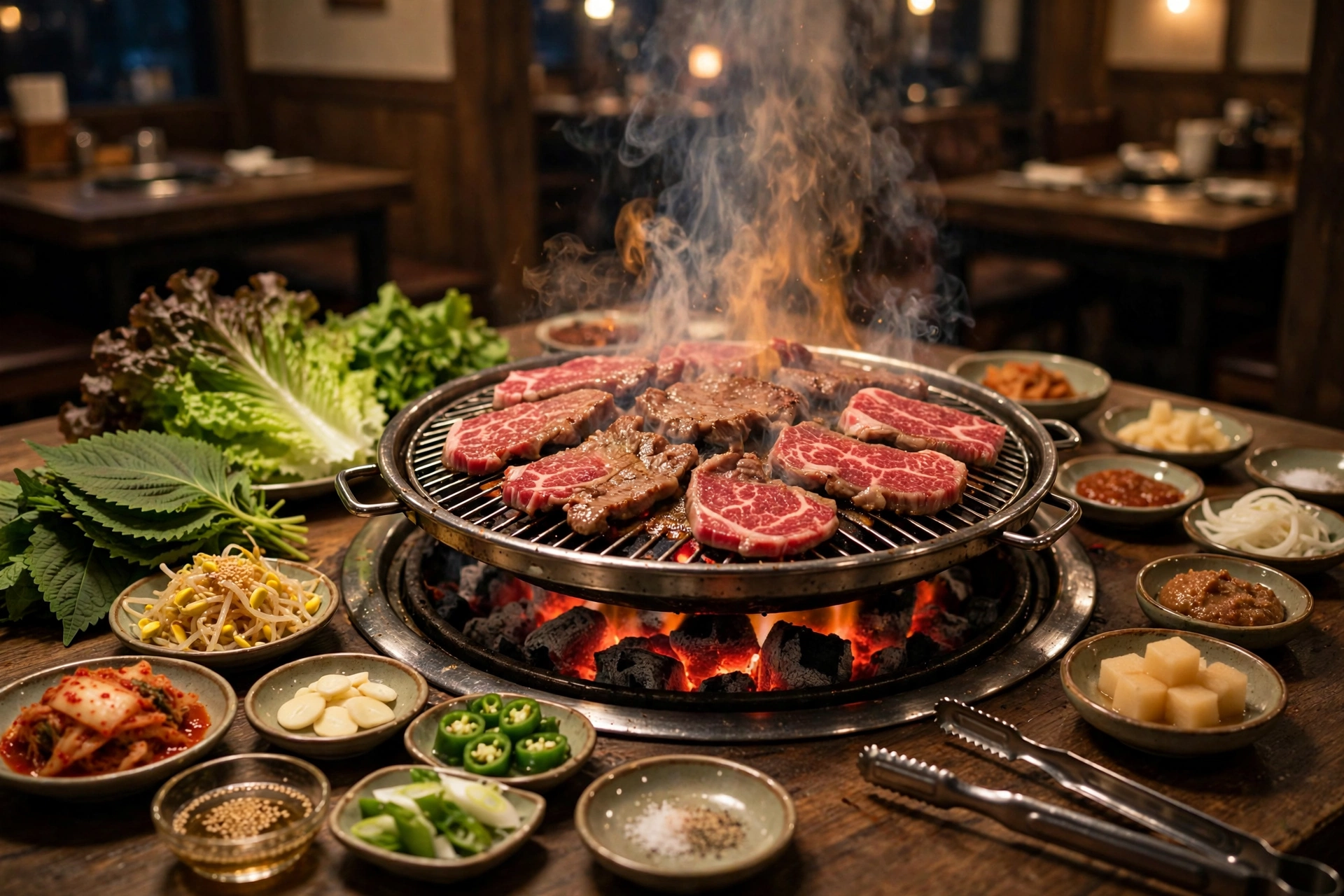
Tosokchon has been serving samgyetang, ginseng chicken soup, near Gyeongbokgung Palace for decades, and it is still the best place in Seoul to try it. A whole young chicken is stuffed with rice, ginseng, and jujube, then simmered until the meat falls off the bone. The soup is rich, clean, and deeply comforting, and it is the dish Koreans eat when they need strength. The restaurant is big, busy, and unpretentious, and the queue at lunch is part of the experience. Order the classic samgyetang, add the ginseng wine if you like, and eat it slowly. It is one of the most honest meals in the city.
Best for: Ginseng chicken soup near the palace
Myeongdong Kyoja — Myeongdong, Seoul
Myeongdong Kyoja has been serving kalguksu, knife-cut noodle soup, in Myeongdong since 1966, and the queue outside is a Seoul landmark. The noodles are cut by hand, the broth is rich with chicken and garlic, and the dumplings are the other dish to order. The restaurant is plain and fast, and the food arrives within minutes. Myeongdong Kyoja holds a Michelin Bib Gourmand, and it is one of the best cheap meals in the city. Go early or late to dodge the queue, order the kalguksu and the dumplings, and eat them quickly: this is fast food in the best sense.
Best for: Hand-cut noodles since 1966
Born & Bred — Majang, Seoul
Born and Bred is a butcher’s restaurant in the Majang meat market, and it is the best place in Seoul to eat Korean beef. The dining room sits above the market, and the beef is cut to order, grilled at the table, and served with the classic accompaniments: ssam leaves, garlic, and doenjang. The quality of the hanwoo beef is extraordinary, and the price is honest for what you get. Born and Bred is a Michelin Guide favourite, and it is a good pick for a meat lover’s night out. Book ahead, go hungry, and let the staff guide the cuts: they know the beef better than anyone.
Best for: Hanwoo beef grilled at the table
Soul Dining — Yongsan, Seoul
Soul Dining is a small, modern Korean restaurant in Yongsan, and it is one of the most interesting rooms in the city. The tasting menu is seasonal and creative, built around Korean flavours with a modern touch, and the dining room is warm and relaxed. Soul Dining is Michelin-starred, and it has a loyal following among Seoul diners who want fine dining without the stiffness. The courses are inventive, the service is friendly, and the price is fair for the level of cooking. Book ahead, and go with an open mind: the menu changes with the seasons, and the best dishes are the ones you did not expect.
Best for: Creative Korean cooking in a relaxed room
Planning Your Visit
Seoul is big, and the restaurants on this list are spread across Gangnam, Cheongdam, Itaewon, Jongno, and Myeongdong, so plan your days around the neighbourhoods. The subway is fast and easy, and a T-money card makes it simple. Book the grand dining rooms a few weeks ahead, and ask your hotel concierge to help with the Korean-language bookings. The casual spots are easier, but the famous ones still draw queues, so go early or late. Lunch is often the smarter play at the grand restaurants, where the menus are shorter and cheaper. And leave room in your plans for the markets: Gwangjang and Namdaemun are worth a meal on their own.
What to Expect on Prices
Seoul covers the whole range, and that is part of the fun. A bowl of kalguksu at Myeongdong Kyoja or samgyetang at Tosokchon costs very little, while dinner at Mingles, La Yeon, or Gaon runs into the hundreds of dollars per person, before drinks and service. Most of the grand restaurants add a service charge to the bill, and tipping on top is not expected in Korea. Wine pairings at the fine dining rooms can cost as much as the food, so check the price before you commit. The mid-range rooms on this list, like Soul Dining and Born and Bred, sit comfortably in between: a generous dinner without the three-star bill.
Frequently Asked Questions
Do I need to book ahead for restaurants in Seoul?
Yes for the fine dining rooms: book Jungsik, Mingles, Mosu, La Yeon, and Gaon a few weeks ahead. The casual spots like Myeongdong Kyoja and Tosokchon do not take bookings, so go early or late and expect a queue at lunch.
Is Seoul expensive to eat in?
It can be, and it can also be very cheap. The three-star dining rooms cost hundreds of dollars per person, while noodle shops, markets, and fried chicken spots cost very little. A good trip mixes both, and the cheap meals are often the most memorable.
What is the one dish I must try in Seoul?
Samgyetang at Tosokchon, and then kalguksu at Myeongdong Kyoja. After that, try hanwoo beef at Born and Bred and a modern Korean tasting menu at Jungsik or Mingles. If you only have one grand dinner, make it Mingles.
Can I get by in English in Seoul restaurants?
Yes at the fine dining restaurants and most popular spots, where menus are in English and staff speak English well. At the smallest market stalls, pointing at the menu or at what the next table is eating works perfectly well.
Is tipping expected in Seoul?
Not really. Most restaurants add a service charge to the bill, and tipping on top is not expected in Korea. You can leave a little extra at a grand restaurant if the service was superb, but nobody expects it.
Conclusion
Seoul is one of the great food cities of the moment, and the twelve restaurants above are a good way into it: three-star modern Korean dining rooms, a ginseng chicken soup that has fed the city for decades, hand-cut noodles in a market hall, and hanwoo beef grilled at the table. Book the grand tables early, queue happily for the cheap ones, and leave room for the places you find on foot. If you want to keep planning, our guide to the Best Restaurants in the World puts Seoul’s top rooms in a global context, and the Best Sushi Restaurants in the World list is a good next stop in Asia. For the wider picture of Japanese cooking, see the Famous Japanese Restaurants round-up.