Best Restaurants in Hong Kong
Hong Kong eats like nowhere else. In a single day you can have dim sum at a three-star Cantonese dining room, beef brisket noodles at a counter that has been going since 1925, and yakitori in a tiny Sheung Wan room that smells of charcoal and smoke. The best restaurants in Hong Kong are not one scene but many, stacked on top of each other in one of the densest, most food-obsessed cities on earth.
This list mixes the grand names with the small ones: the Cantonese dining rooms that define the city’s cooking, the French and Italian rooms that have held their stars for years, and the casual spots locals queue for without thinking twice. Every place below is real, famous, and worth planning a meal around. Bring an appetite, book the grand rooms early, and leave room for the noodle shop you find by accident.
How We Picked These Restaurants
We started with the Michelin Guide and the city’s long-standing reputations, then checked each name against what chefs, critics, and Hong Kong diners actually say. A star or a famous name gets a restaurant on the long list, but it does not guarantee a place here. We wanted rooms that stay great year after year, and we weighed the food against the whole experience: the welcome, the room, the price, and whether locals still eat there.
- Reputation: Long-standing names that chefs and guides keep recommending, from three-star dining rooms to beloved noodle shops.
- Food quality: Cooking that is precise, seasonal, and true to its tradition, whether Cantonese, French, or Japanese.
- Consistency: The same care on a quiet weekday as on a packed Saturday night.
- What real diners say: Repeated praise for named dishes, balanced with honest notes on booking, queues, and prices.
The List: Best Restaurants in Hong Kong
Lung King Heen — Central, Hong Kong
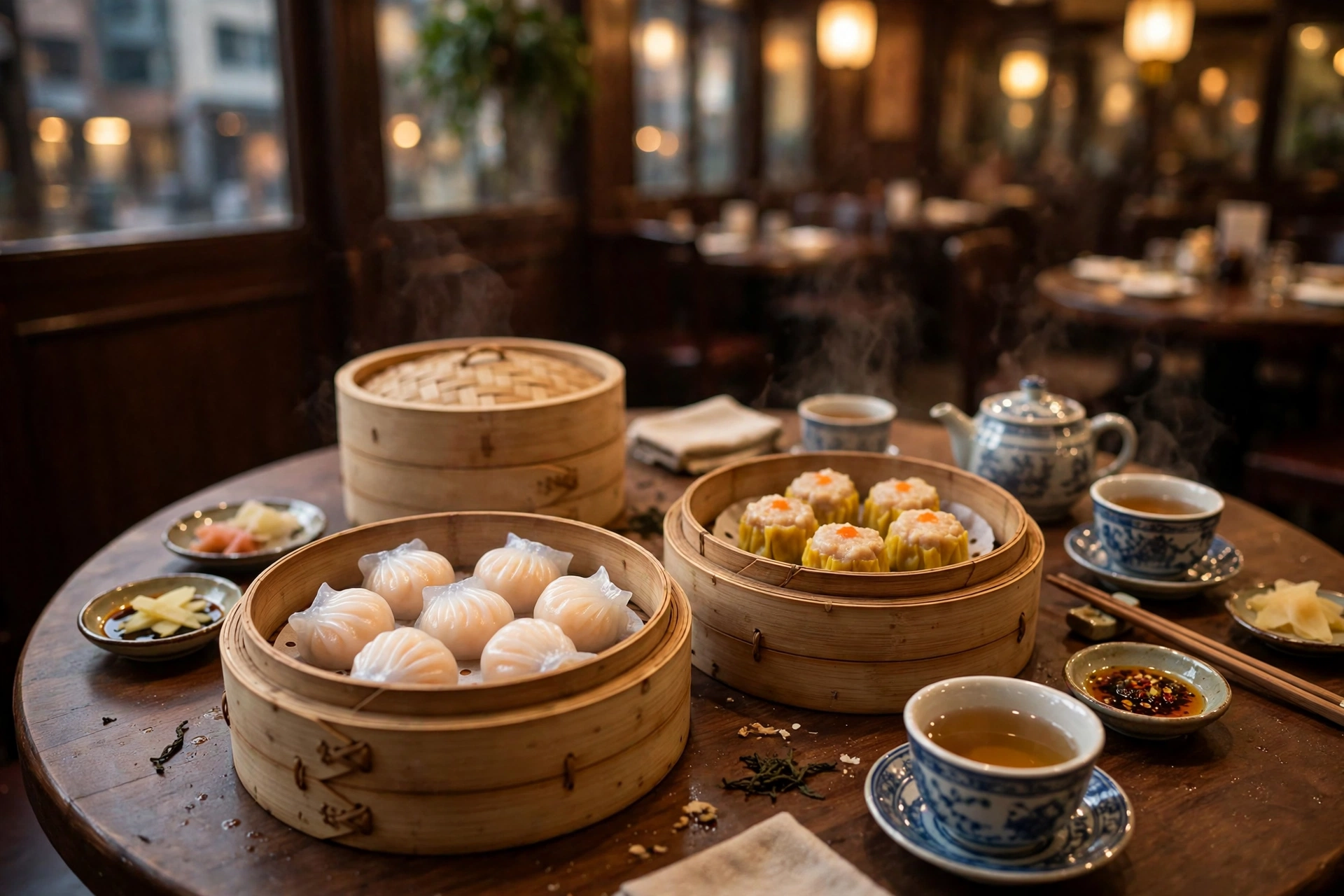
Lung King Heen, inside the Four Seasons, was the first Chinese restaurant in the world to earn three Michelin stars, and it still sets the standard for Cantonese fine dining. Chef Chan Yan Tak’s dim sum is the draw: delicate, precise, and made to order, with the harbour view as a backdrop. The dining room is calm and grand, and the service is exact. Lunch is the classic move here, when the dim sum menu is at its best. Book ahead, dress smartly, and order the chef’s selection if you cannot decide. It is expensive, and it is worth it: this is Cantonese cooking at its most refined.
Best for: The finest dim sum in the world
Tim Ho Wan — Sham Shui Po, Hong Kong
Tim Ho Wan started as a tiny shop in Mong Kok and became famous as the cheapest Michelin-starred restaurant in the world, and the original Sham Shui Po branch still draws a queue. The baked barbecue pork buns are the dish to order: crisp on top, soft inside, filled with sweet char siu. The rest of the dim sum menu is just as good, and the prices are a fraction of the grand dining rooms. Go early, take a number, and expect to share a table. It is noisy, fast, and completely unpretentious, and it is one of the best meals in Hong Kong for the money.
Best for: Famous pork buns at a tiny price
Amber — Central, Hong Kong
Richard Ekkebus’s Amber, inside The Landmark, is one of Hong Kong’s great French restaurants, and it has held two Michelin stars for years. The cooking is French with a Japanese touch: precise, seasonal, and lighter than the classic French dining rooms, with a famous menu built around the chef’s travels and the produce of the season. The dining room is elegant and calm, and the service is warm. Amber is a good pick for a special dinner in Central, and the lunch menu is one of the city’s best deals at this level. Book ahead, and save room for the dessert courses.
Best for: Elegant French dining in Central
Caprice — Central, Hong Kong
Caprice, inside the Four Seasons, is Hong Kong’s grandest French dining room, and it has held three Michelin stars for years. Guillaume Galliot’s cooking is classical French with a modern touch, and the dining room looks out over Victoria Harbour. The meal is long, formal, and precise, and the wine list is one of the best in Asia. This is a special-occasion restaurant in every sense: book well ahead, dress up, and set aside the whole evening. The cheese course alone is worth the trip. If you want one grand French dinner in Hong Kong, this is the one.
Best for: A grand, harbour-view French dinner
8 1/2 Otto e Mezzo Bombana — Central, Hong Kong
Umberto Bombana’s Otto e Mezzo is the best Italian restaurant in Asia, and it has held three Michelin stars for years. The dining room is warm and elegant, and the cooking is classic Italian done with obsessive care: handmade pasta, white truffles in season, and a famous tagliolini with lobster. Bombana trained in Italy and cooks with a light touch, so the rich dishes never feel heavy. The wine list leans Italian, and the service is warm. Book ahead, and if you are there in truffle season, say yes to the truffle dishes. It is one of the most satisfying grand dinners in the city.
Best for: Three-star Italian cooking in Hong Kong
The Chairman — Central, Hong Kong
The Chairman is the Cantonese restaurant chefs in Hong Kong eat at when they are off duty, and that tells you everything. Chef Kwok Keung Tung cooks with ingredients most kitchens never see: aged soy sauces, steamed flower crab, and a famous chicken dish that takes days to prepare. The room is elegant but not stiff, and the menu changes with the seasons. The Chairman is Michelin-starred and has topped lists of Asia’s best restaurants. Book well ahead, order the dishes the staff recommend, and go with people who love to share. This is Cantonese cooking at its most serious and its most generous.
Best for: Cantonese cooking chefs admire
Yardbird — Sheung Wan, Hong Kong
Yardbird is a yakitori bar with a Michelin star, and it is one of the most fun rooms in Hong Kong. The menu is built around skewers cooked over binchotan charcoal: chicken in every cut, from the familiar thigh to the less familiar heart and skin, plus vegetables, fish, and a famous chicken liver mousse. The room is loud, warm, and packed, and the drinks are good. Yardbird takes bookings, but walk-ins can work if you go early. Order a lot of skewers, share them, and save room for the soft-serve dessert. It is casual, it is smoky, and it is brilliant.
Best for: Charcoal yakitori and a loud, fun room
Mott 32 — Central, Hong Kong
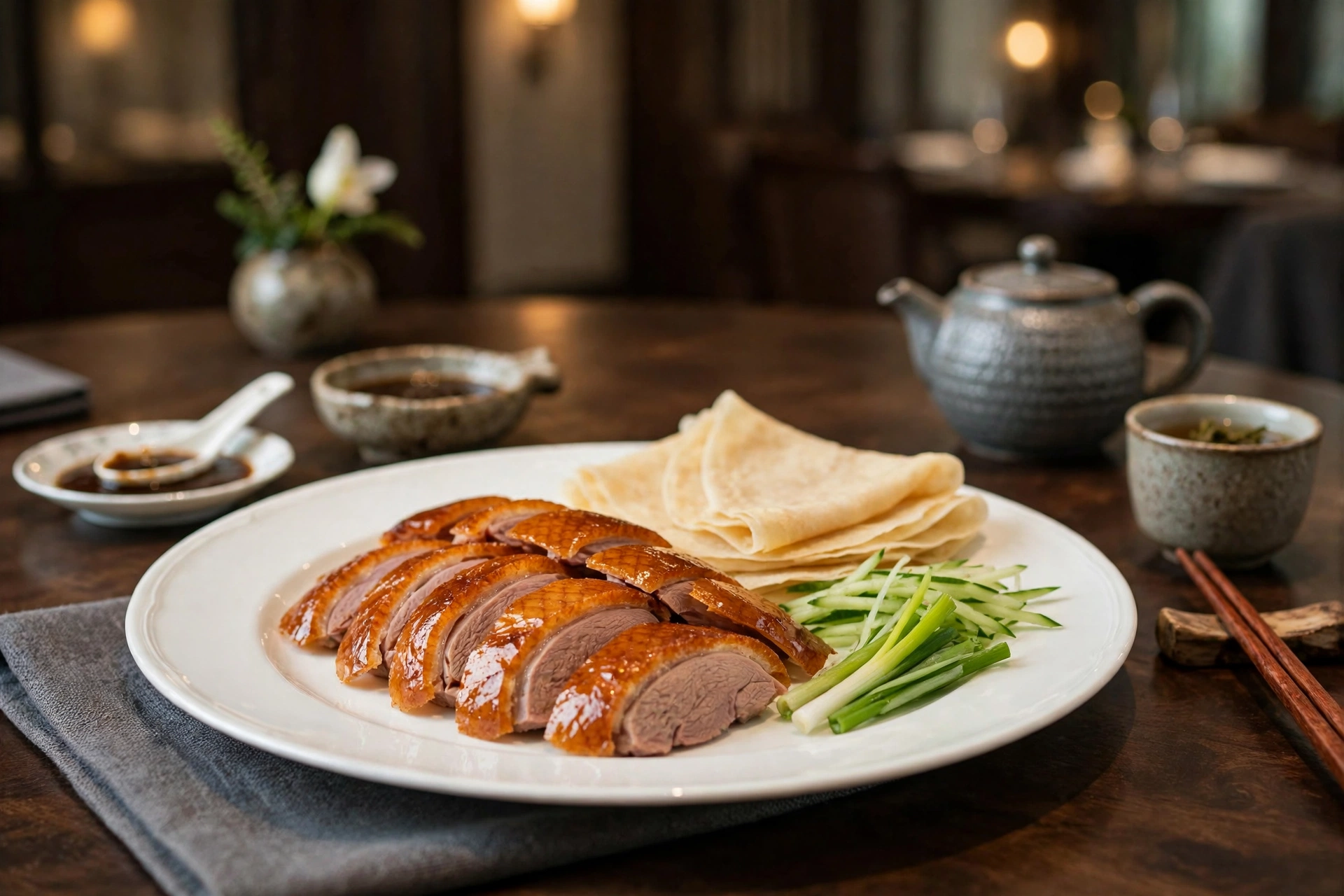
Mott 32 is the glamorous face of modern Chinese dining: a grand, art-deco dining room in Central, a famous Peking duck carved at the table, and a menu that mixes classic Cantonese dishes with a modern touch. The duck is the dish to book ahead for, and it is worth it: crisp skin, rich meat, and pancakes made to order. The rest of the menu is strong too, from the dim sum to the stir-fried dishes. Mott 32 is a Michelin Guide favourite and one of the most popular rooms in the city. Book ahead, go with a group, and order more than you think you need.
Best for: Peking duck in a glamorous dining room
Bo Innovation — Wan Chai, Hong Kong
Alvin Leung, the self-taught “Demon Chef,” built Bo Innovation into one of Hong Kong’s most inventive restaurants, and it is Michelin-starred. The tasting menu is playful and bold: dishes that look like one thing and taste like another, built around Chinese flavours and modern technique. The famous molecular xiao long bao, served on a spoon, is still the dish people talk about. The dining room is modern and relaxed, and the meal is fun in a way fine dining rarely is. If you want a tasting menu with a sense of humour, this is the one. Book ahead, and go with an open mind.
Best for: A playful, inventive tasting menu
L’Atelier de Joël Robuchon — Central, Hong Kong
L’Atelier de Joël Robuchon brings the late chef’s famous counter dining to Hong Kong, and the room has held three Michelin stars. The counter seats are the ones to ask for: you watch the chefs work, and the dishes arrive one by one, from the famous mashed potatoes to delicate fish and seasonal vegetables. The cooking is classic French, precise and rich, and the room is elegant without being stiff. It is a good pick if you want a grand French meal with a view of the kitchen. Book the counter early, and save room for the cheese course, which is one of the best in the city.
Best for: Classic French cooking watched from the counter
Ho Lee Fook — Central, Hong Kong
Ho Lee Fook is the fun one: a modern Chinese restaurant in Central with a name that makes people smile and a menu that mixes Cantonese classics with a playful touch. Jowett Yu’s kitchen serves fried chicken with waffles, short rib with black pepper, and dumplings that arrive looking like little works of art. The room is loud, the drinks are good, and the crowd is young. Ho Lee Fook is a Michelin Guide favourite, and it is a good pick for a night out with friends when you want great food without the formality. Book ahead on weekends, and order the chicken.
Best for: Modern Chinese food and a fun night out
Kau Kee Restaurant — Central, Hong Kong
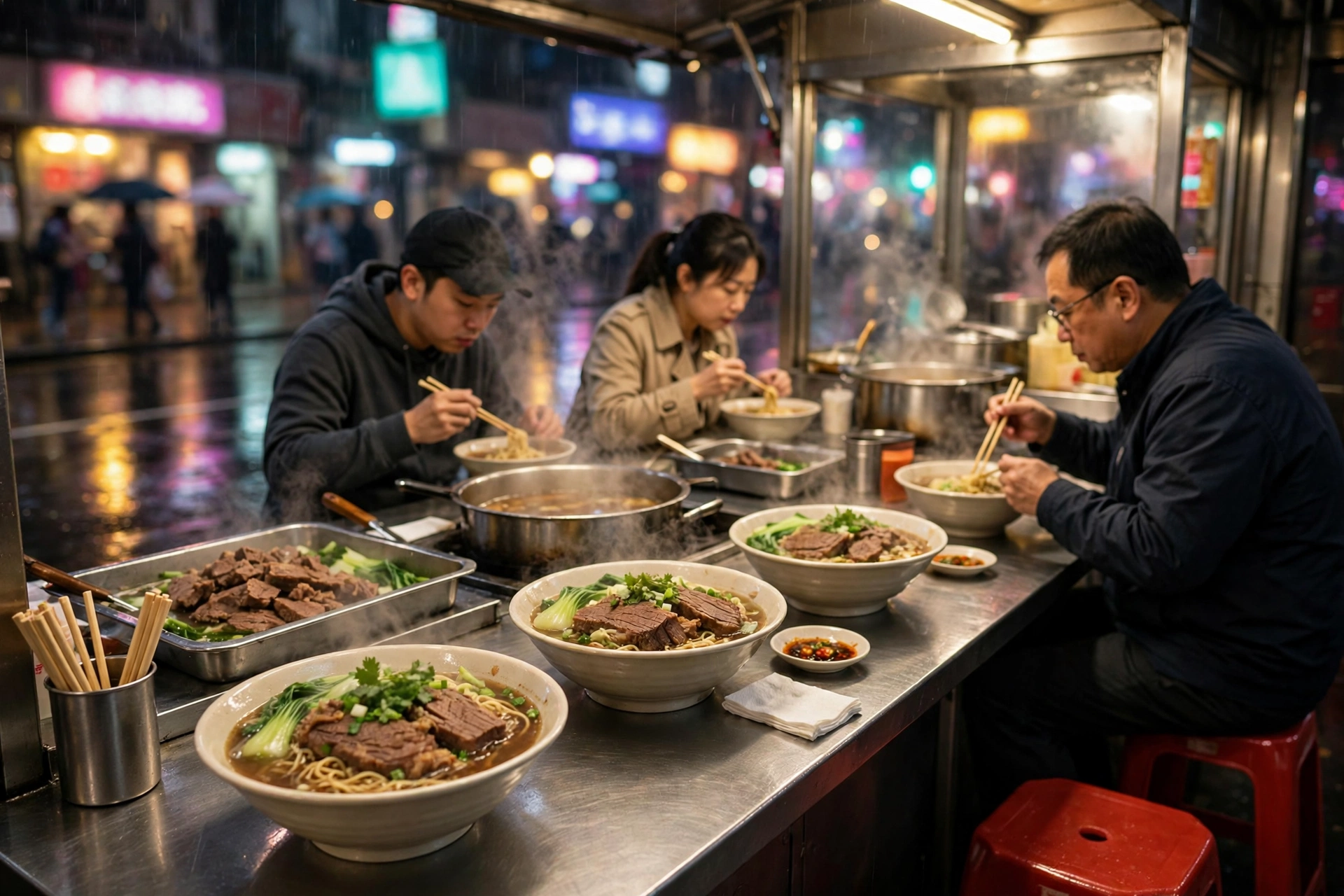
Kau Kee has been serving beef brisket noodles in Central since 1925, and it is still one of the best cheap meals in Hong Kong. The shop is tiny and plain, the noodles are springy, and the brisket is slow-cooked until it falls apart. The clear broth is the quiet star: rich, clean, and deeply savoury. Kau Kee holds a Michelin Bib Gourmand, and the queue at lunchtime is part of the experience. Go early, order the brisket noodles, and do not expect small talk. It is fast, it is cheap, and it is one of the most honest meals in the city.
Best for: Beef brisket noodles since 1925
Planning Your Visit
Hong Kong is compact, and the MTR makes it easy to move between Central, Sheung Wan, Wan Chai, and Sham Shui Po in minutes, so you can plan two very different meals in one day. Book the grand dining rooms a few weeks ahead, and ask your hotel concierge to help: they book these tables every day. The casual spots are easier, but the famous ones still draw queues, so go early or be ready to wait. Lunch is often the smarter play at the grand restaurants, where the menus are shorter and cheaper. And leave room in your plans for the street-level stalls and noodle shops you will pass on foot: some of the best food in Hong Kong is not in a guide at all.
What to Expect on Prices
Hong Kong covers the whole range, and that is part of the fun. A bowl of brisket noodles at Kau Kee or dim sum at Tim Ho Wan costs very little, while dinner at Caprice, Lung King Heen, or Otto e Mezzo runs into the hundreds of dollars per person, before drinks and service. Most of the grand restaurants add a service charge of around ten percent to the bill, and tipping on top is not expected. Wine pairings at the French and Italian rooms can cost as much as the food, so check the price before you commit. The mid-range rooms on this list, like Yardbird and Ho Lee Fook, sit comfortably in between: a generous dinner for two without the three-star bill.
Frequently Asked Questions
Do I need to book ahead for restaurants in Hong Kong?
Yes for the grand dining rooms: book Lung King Heen, Caprice, The Chairman, and Otto e Mezzo a few weeks ahead. The casual spots like Tim Ho Wan and Kau Kee do not take bookings, so go early and expect a queue at lunch.
Is Hong Kong expensive to eat in?
It can be, and it can also be very cheap. The three-star dining rooms cost hundreds of dollars per person, while noodle shops, dim sum counters, and dai pai dong stalls cost very little. A good trip mixes both, and the cheap meals are often the most memorable.
What is the one dish I must try in Hong Kong?
Dim sum, and Lung King Heen or Tim Ho Wan are the two best places to start. After that, try the beef brisket noodles at Kau Kee and the Peking duck at Mott 32. If you only have one dinner, make it The Chairman.
Can I get by in English in Hong Kong restaurants?
Yes. Menus in the grand restaurants and most popular spots are in English, and staff speak English well. At the smallest noodle shops, pointing at the menu or at what the next table is eating works perfectly well.
Is tipping expected in Hong Kong?
Not really. Most restaurants add a service charge of around ten percent to the bill, and that is the tip. You can leave a little extra at a grand restaurant if the service was superb, but nobody expects it.
Conclusion
Hong Kong is one of the great food cities, and the twelve restaurants above are a good way into it: three-star Cantonese dining rooms, a noodle shop that has been going for a century, yakitori cooked over charcoal, and French and Italian rooms that hold their own against anything in Europe. Book the grand tables early, queue happily for the cheap ones, and leave room for the places you find on foot. If you want to keep planning, our guide to the Best Chinese Restaurants in the World puts Hong Kong’s Cantonese rooms in a global context, and the Best Street Food in Bangkok list is a good next stop in Asia. For seafood lovers, the Famous Seafood Restaurants in the World round-up is worth a look too.