
Best Restaurants in the World: The Ultimate Food Guide
Ask ten food lovers to name the best restaurants in the world and you will get ten different lists — and honestly, that argument is half the fun. A tiny sushi counter in Tokyo, a joyful tasting menu in Barcelona and a quiet dining room in Lima can all feel like the best meal of your life, just in completely different ways.
This list is our honest attempt to gather the names that come up again and again: places with serious awards, yes, but also places real diners still talk about years later. Think of it as a bucket list, not a ranking carved in stone.

How We Picked These Restaurants
We started with reputation — World’s 50 Best and Michelin recognition, long-standing fame, and the chefs other chefs admire. Then we asked a simpler question: if a friend saved up for one special trip, would we still send them here? You can browse more of our favourites over in world restaurants as you plan.
- Reputation and awards — sustained recognition from guides and critics, not one lucky season.
- Food quality — cooking that is distinctive enough to recognise blindfolded.
- Consistency over time — places that stayed excellent after the hype moved on.
- What real diners say — the meals people describe in detail years afterwards.
The Best Restaurants in the World Right Now
Central — Lima, Peru
Central is chef Virgilio Martínez’s love letter to Peru, built around the country’s astonishing range of altitudes and ecosystems. Courses move from the Pacific coast up into the Andes and deep into the Amazon, so one plate might centre on potatoes you have never heard of and the next on Amazonian fish and herbs. It topped the World’s 50 Best list in 2023, and the calm, earthy dining room in Barranco keeps the focus on the ingredients. Honest caveat: tables book out well ahead, so plan the Lima trip around the reservation, not the other way round.
Best for: A once-in-a-lifetime taste of Peru’s landscapes on one menu
Disfrutar — Barcelona, Spain
Disfrutar means “to enjoy,” and that is exactly the brief. Opened in 2014 by three former elBulli chefs — Oriol Castro, Eduard Xatruch and Mateu Casañas — it holds three Michelin stars for cooking that is playful without ever being silly. Expect edible surprises: the famous multi-spherical pesto, dishes that bubble, smoke or change at the table, and a team that clearly wants you to have fun. The room is bright, relaxed and far less formal than the food’s reputation suggests. Caveat: the waiting list is long, and cancellations are worth stalking.
Best for: Joyful, inventive tasting menus with a sense of humour
Noma — Copenhagen, Denmark
Noma, led for two decades by René Redzepi, basically invented New Nordic cooking — foraging, fermentation and a fierce loyalty to Scandinavian ingredients — and was named the world’s best restaurant five times. A small honesty note matters here: Noma ended its regular restaurant service at the end of 2024 to reinvent itself as a food lab with occasional seasons and pop-ups, so this is not a table you can simply book any week of the year. Its influence, though, is everywhere. If a pop-up season is announced and you can go, it remains a pilgrimage.
Best for: Food history in the making — catch a pop-up season if you can
Le Bernardin — New York City, United States
Le Bernardin is New York’s temple of seafood, holding three Michelin stars under chef Éric Ripert. The philosophy is simple to say and hard to do: the fish is the star, and everything else — the delicate sauces, the precise cooking, the serene service — exists to support it. Tuna, halibut and caviar dishes here are the versions other kitchens quietly measure themselves against. The dining room feels calm and grown-up rather than trendy. Caveat: it is a special-occasion spend, and prime dinner slots go quickly.
Best for: The definitive fine-dining seafood experience
Atomix — New York City, United States
Atomix is a small chef’s counter in Manhattan where chef Junghyun “JP” Park and his wife Ellia present a modern Korean tasting menu that feels both personal and precise. Each course arrives with a small card explaining the ingredient and the idea behind it, which sounds like homework and turns out to be charming. The cooking earned the restaurant two Michelin stars and a devoted following far beyond New York. With so few seats each night, it books out fast — set a reminder for when reservations open.
Best for: An intimate counter experience and modern Korean fine dining
Table by Bruno Verjus — Paris, France
Table is the Paris restaurant chefs recommend to each other. Chef Bruno Verjus — a former food writer who came to cooking later in life — builds the menu around whatever the market and the season offered that morning, and the open kitchen keeps everything feeling alive rather than ceremonial. The Michelin-starred cooking is ingredient-obsessed: a perfect piece of fish, vegetables treated like treasure, sauces with real soul. The room is small, warm and refreshingly unpretentious for this level. Caveat: the intimate size means reservations need advance planning, especially for dinner.
Best for: Seasonal, ingredient-led Parisian cooking without the stiffness
Osteria Francescana — Modena, Italy
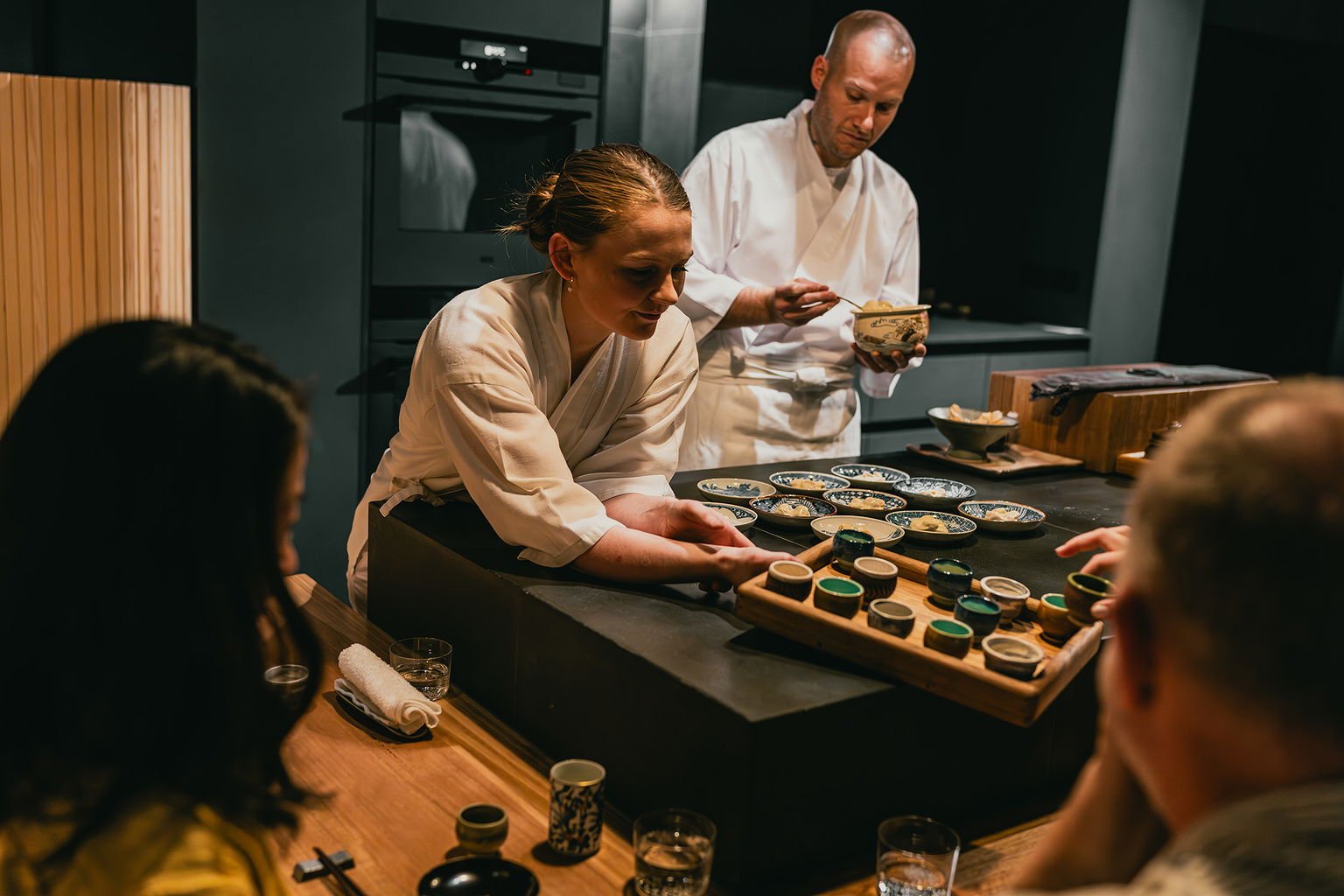
Massimo Bottura’s three-Michelin-starred restaurant in a quiet Modena side street twice topped the World’s 50 Best list, and it still feels like nowhere else. Bottura takes the food of Emilia-Romagna — tortellini, Parmigiano Reggiano, balsamic vinegar — and reimagines it with wit and emotion. “Five Ages of Parmigiano Reggiano” and the deliberately dropped lemon tart, “Oops! I Dropped the Lemon Tart,” are now modern classics. The twelve-or-so tables make it intimate and very hard to book; the waitlist is genuinely worth joining.
Best for: Italian tradition, reinvented with heart and humour
DiverXO — Madrid, Spain
DiverXO is chef Dabiz Muñoz’s three-Michelin-starred playground, and subtlety is not on the menu. The cooking mashes up Spanish technique with Asian and Latin flavours, served in a dining room that feels part street market, part dream sequence — the famous “flying pigs” theme runs through the experience. Courses arrive on unusual vessels, flavours are bold to the point of joyful excess, and the whole thing somehow stays precise. It is one of the hardest reservations in Spain, so expect to plan months ahead and pay accordingly.
Best for: High-energy, boundary-pushing dining that never plays it safe
Pujol — Mexico City, Mexico
Enrique Olvera’s Pujol put modern Mexican fine dining on the global map. The star of the menu is the mole madre — a rich, dark mole that is continually refreshed and aged, famously counted in hundreds of days, served alongside a fresh mole so you can taste the difference time makes. Alongside the main dining room, the taco omakase at the bar is one of the city’s great food experiences. The space is serene and garden-like. Caveat: both formats are in high demand, so book the moment your travel dates are fixed.
Best for: Understanding how deep and refined Mexican cuisine can be
Odette — Singapore
Odette, inside Singapore’s National Gallery, is chef Julien Royer’s three-Michelin-starred modern French restaurant, named after his grandmother. The cooking is French in technique and soul, gently lit up by Asian ingredients — think pristine seafood, elegant sauces and produce treated with real reverence. The soft, art-filled dining room is one of the calmest in Asia, and service is polished without a hint of stuffiness. It is widely regarded as one of the finest restaurants in the region. Book early; celebratory tables here are spoken for weeks ahead.
Best for: Serene, beautiful fine dining in the heart of Singapore
Gaggan Anand — Bangkok, Thailand
Gaggan Anand’s Bangkok restaurant is part tasting menu, part rock show. Chef Gaggan Anand built his name reimagining Indian flavours with modern technique — the original Gaggan topped Asia’s 50 Best list repeatedly — and his current chef’s counter format is louder, funnier and more interactive, with music, storytelling and his famous emoji-style menu guiding the night. Dishes like the exploding yogurt sphere made his name, and eating with your hands is encouraged. Caveat: seats are few, performances sell out, and this is dinner as theatre — go ready to join in.
Best for: A wildly fun, theatrical take on progressive Indian cuisine
Sukiyabashi Jiro — Tokyo, Japan
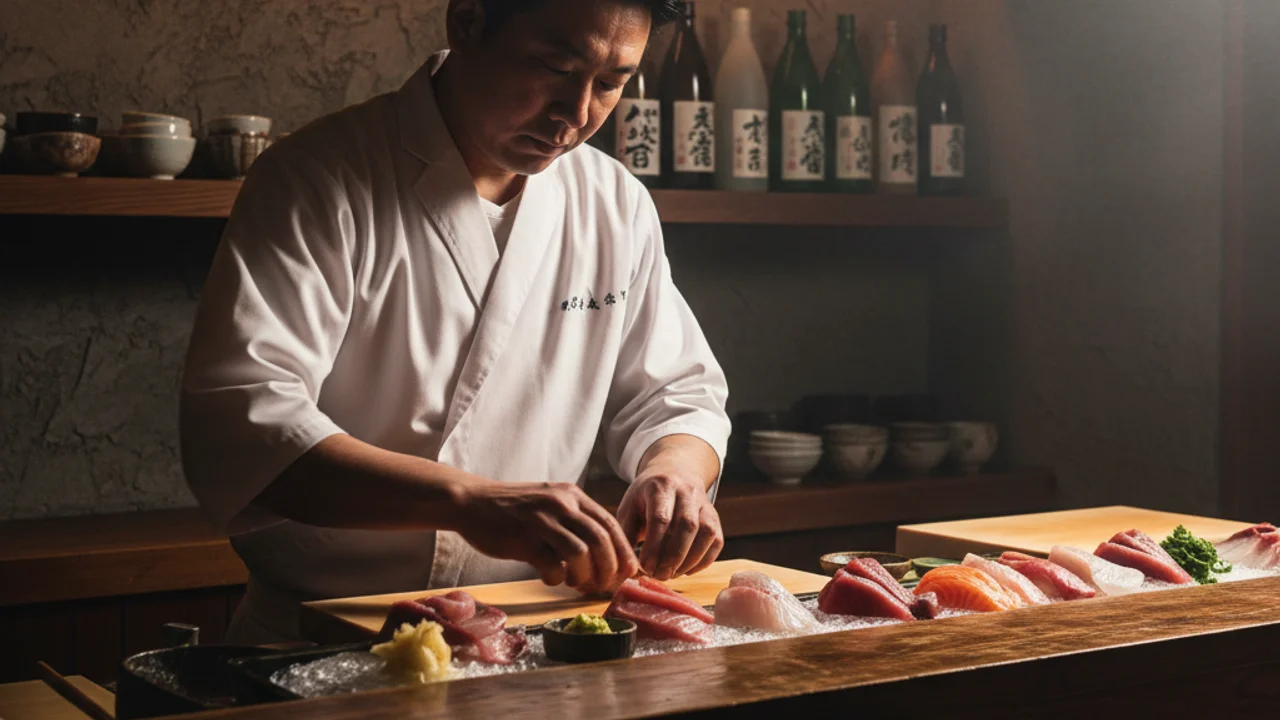
The most famous sushi counter on earth sits in a Ginza basement with just ten seats. Sukiyabashi Jiro was the first sushi restaurant to receive three Michelin stars, and the documentary Jiro Dreams of Sushi made founder Jiro Ono a global symbol of craftsmanship; his son Yoshikazu now leads the counter. One honest caveat: it no longer appears in the Michelin Guide because it does not take bookings from the general public — reservations typically go through a luxury hotel concierge. If you ever get a seat, expect focus, silence and extraordinary nigiri.
Best for: A legendary omakase pilgrimage — if the concierge gods smile on you
A Hidden Gem Worth the Trip
One more name for your notebook: Den, in Tokyo. Chef Zaiyu Hasegawa’s Michelin-starred kaiseki restaurant is famous among food lovers for doing something rare — making deeply skilled Japanese cooking genuinely playful. The signature “Dentucky Fried Chicken,” a chicken wing stuffed with rice and served in a fast-food-style box, tells you everything about the spirit of the place. It is serious technique with a grin, and diners consistently rank it among their happiest meals in Japan. For more stories like this, keep an eye on our guide to the most famous restaurants in the world.
Frequently Asked Questions
How far ahead do I need to book these restaurants?
For most names on this list, think two to three months ahead, and longer for the smallest rooms. Some release reservations on a set day each month and sell out within hours. Joining waitlists genuinely works — cancellations happen, especially midweek.
How much does a meal at one of the world’s best restaurants cost?
Tasting menus at this level commonly run into the hundreds of dollars per person before drinks, and wine pairings can add significantly more. Lunch menus, where offered, are often the gentler way in. Always check the current menu price on the restaurant’s own site before you book.
Is there a dress code?
Most of these dining rooms expect smart attire — jackets are rarely compulsory nowadays, but shorts, sportswear and flip-flops will feel out of place, and a few traditional counters in Japan are stricter. When in doubt, smart and simple never fails.
How does tipping work at this level?
It depends on the country. In Japan, tipping is not customary and service is included. In much of Europe a service charge may be included, with a small extra left for great service. In the United States, tipping on top is standard unless the restaurant states a service-included policy.
Are these restaurants suitable for vegetarians or dietary restrictions?
Usually, yes — with notice. Tell the restaurant when you book, not when you sit down. Several top kitchens now offer celebrated vegetable menus, but a tiny counter built around fish, like a traditional sushi counter, may only be able to adjust so far.
Final Thoughts
The honest truth is that there is no single “best” restaurant in the world — there is only the best meal for the trip you are taking, the person across the table and the flavours you love most. Use this list as a starting map, book the table that excites you most, and leave room in every trip for the small local place nobody has written about yet.
Some of the meals above will be the most expensive of your life. Done right, they are also the ones you will still be describing, dish by dish, a decade from now. Happy eating — and happy arguing about your own list.
2 Comments