Famous Street Food Dishes
Some of the best meals on earth never come with a tablecloth. Famous street food dishes are cooked on a cart, a grill or a wok a few feet from the pavement, served hot, eaten standing up, and remembered for years. They are cheap, fast and honest, and they tell you more about a place than a guidebook ever could.
This list travels from Mexico City to Osaka, from Beirut to Bangkok, picking the dishes that locals queue for and travellers plan trips around. Each one has a real home, a real story and a real place where it tastes best. Bring cash, bring an appetite, and come hungry enough to try a second helping.
How We Picked These Dishes
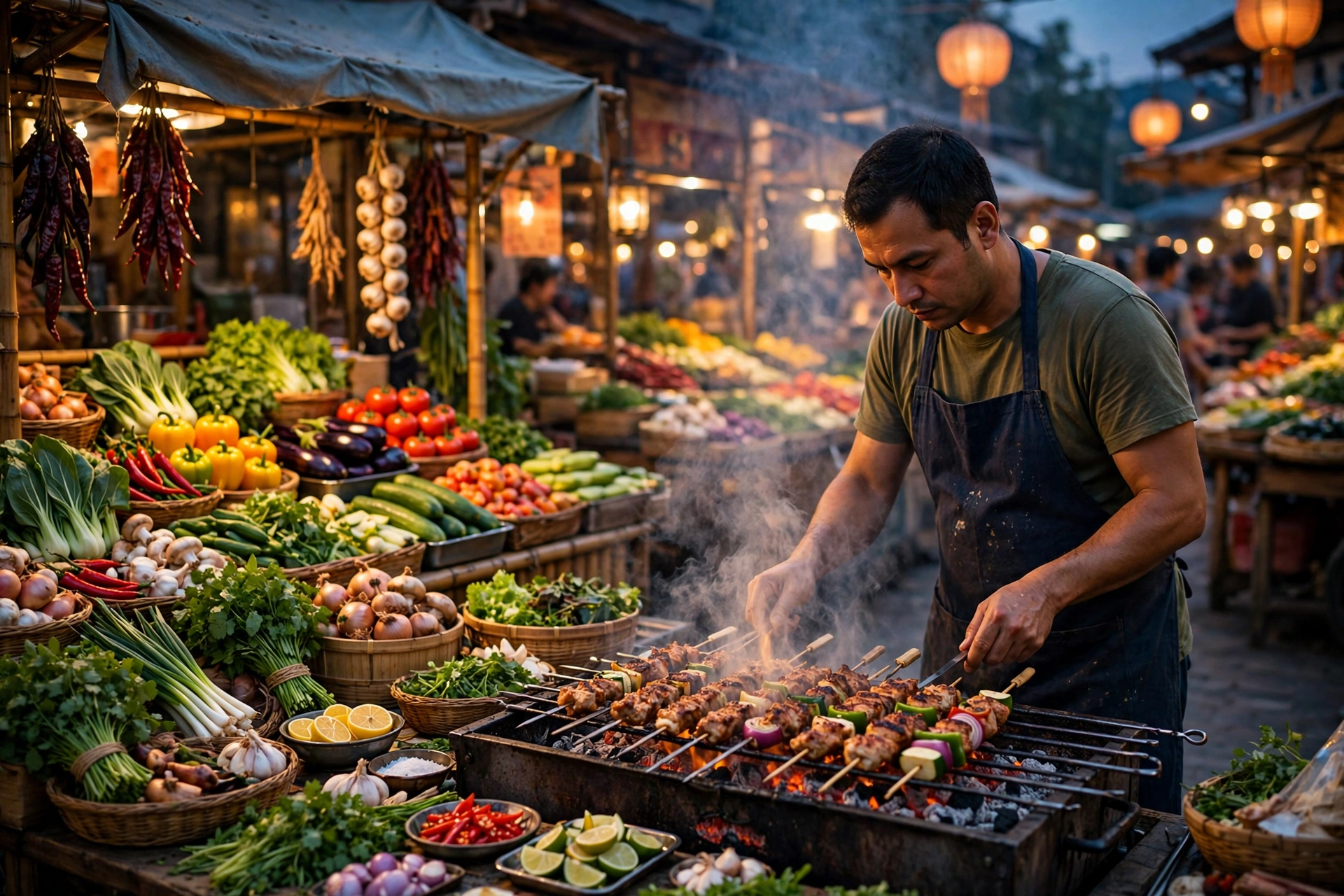
We picked dishes that are famous far beyond their home city, still cooked the traditional way by street vendors, and loved by the people who grew up eating them. A dish had to be something you can actually find on the street, not just on a restaurant menu. We also weighed history, flavour and the way each dish shows off its city’s cooking style.
- Real fame: dishes known across borders, not just a passing trend.
- Street roots: born on carts, stalls and night markets, and still sold there.
- Distinct flavour: a taste you cannot mistake for anything else.
- What locals say: the stalls regulars return to week after week.
The List: Famous Street Food Dishes
Twelve dishes, twelve cities, one very full stomach. Work through them in any order you like, but try each one where it comes from if you ever get the chance.
Tacos al Pastor — Mexico City, Mexico
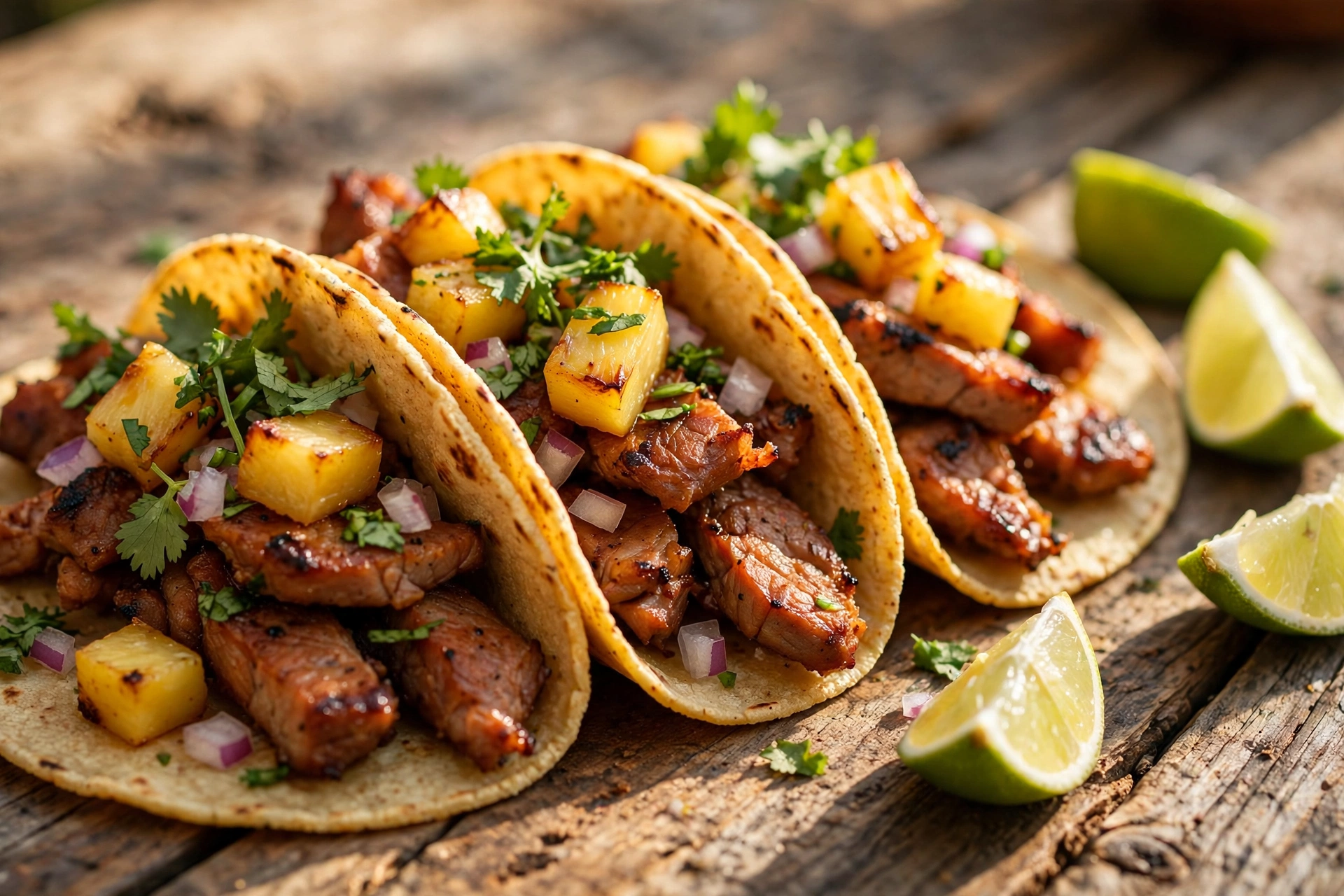
Tacos al pastor are Mexico City’s gift to the late-night crowd. Thin slices of pork are marinated in achiote and dried chillies, stacked on a vertical spit like a Lebanese shawarma — a trick brought to Mexico by Lebanese immigrants in the 1930s — then shaved off to order and tucked into warm corn tortillas. The cook adds diced onion, fresh coriander, a sliver of pineapple and a squeeze of lime, and the whole thing costs next to nothing. Eat them standing at the stall, salsa dripping down your wrist, and you will understand why Mexico City runs on these. Look for a trompo spinning by the pavement and a queue of locals; that is your sign. For a deeper dive into the city’s taco scene, see our guide to the Best Tacos in Los Angeles for how the style travelled north.
Pad Thai — Bangkok, Thailand
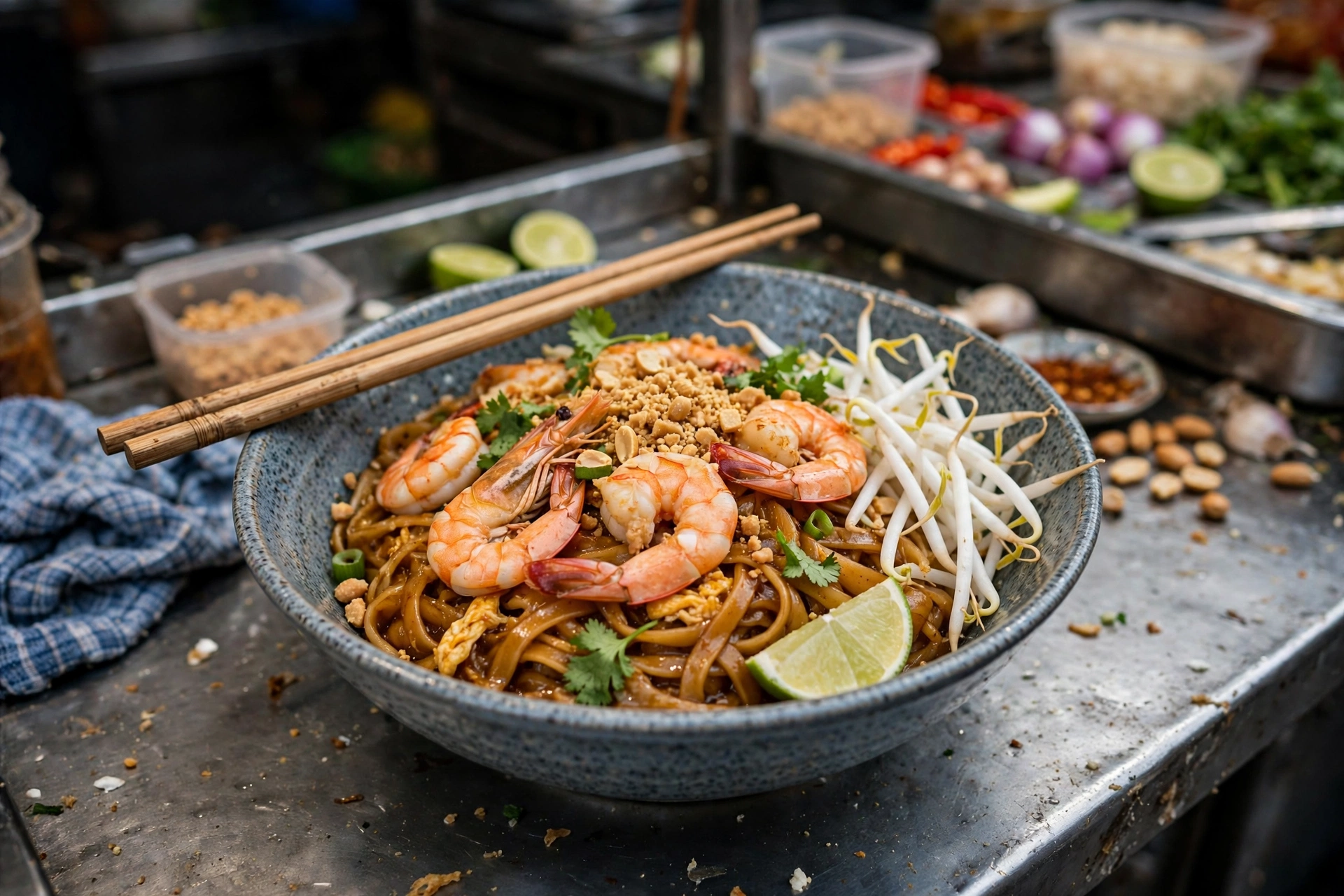
Pad thai is the dish that made Thai street food famous around the world, and it still tastes best from a Bangkok wok. Flat rice noodles are tossed over fierce heat with egg, dried shrimp, tofu, bean sprouts, garlic chives and crushed peanuts, then finished with tamarind, fish sauce and palm sugar. The magic is the balance: sweet, sour, salty and a little heat, all in one mouthful. Every vendor has their own ratio, and regulars will argue for hours about whose is right. Order it with prawns if you can, squeeze the lime wedge over the top, and eat it the moment it lands. It belongs on any list of World Famous Food Dishes, and Bangkok’s night markets are the place to judge it for yourself.
Banh Mi — Ho Chi Minh City, Vietnam
Banh mi is a sandwich with a colonial past and a Vietnamese soul. French baguettes met Vietnamese fillings, and the result is a crackling crust, a soft crumb, and a filling of pâté, cold cuts, pickled carrot and daikon, cucumber, coriander and a smear of mayonnaise. The best ones come from carts where the bread is baked fresh through the day and the fillings are sliced to order. It is breakfast, lunch and a midnight snack all at once, and it costs about the price of a coffee. Ask for chilli if you like heat, and eat it while the bread is still warm. Once you have had a proper Saigon banh mi, the pale copies sold elsewhere will never quite satisfy you again.
Takoyaki — Osaka, Japan
Takoyaki are golden balls of batter with a piece of octopus tucked inside, and Osaka treats them like a point of pride. Vendors pour batter into a dimpled iron griddle, drop in diced octopus, spring onion and pickled ginger, then flip each ball with skewers until it is crisp outside and soft inside. They arrive piled in a paper boat, brushed with sweet sauce, dusted with bonito flakes that wave in the heat, and finished with Japanese mayonnaise. They are far too hot to eat at first, which never stops anyone trying. Dotonbori in Osaka is the classic place to eat them, ideally while walking between the neon signs with a cold drink in your other hand.
Shawarma — Beirut, Lebanon
Shawarma is the smell that pulls you down a street before you even see the stall. Marinated meat — chicken or lamb — turns slowly on a spit, and the cook shaves off crisp-edged slices straight into warm flatbread with garlic sauce, pickles and fries. In Beirut it is a late-night ritual; in Jerusalem and Amman it is lunch; in London and Toronto it is homesickness cured in five minutes. The details change from city to city, but the idea stays the same: hot meat, sharp pickles, creamy sauce, soft bread. Ask for extra toum if you love garlic, and do not be shy about the chilli sauce. A good shawarma is messy, generous and gone in about three minutes flat.
Falafel — The Middle East
Falafel might be the most travelled street snack on this list. Crisp chickpea or fava bean patties, green inside with herbs, are fried to order and stuffed into pita with salad, pickles, tahini and sometimes a fiery chilli sauce. Cairo claims the fava bean version, called ta’ameya; Jerusalem, Beirut and Amman all have their own fiercely defended recipes. What matters is the fry: shatteringly crisp outside, fluffy inside, eaten within minutes. It is cheap, filling and completely plant-based, which is one reason it spread from Middle Eastern street corners to food trucks on every continent. Eat it fresh from the fryer or do not bother at all.
Arepas — Colombia and Venezuela
Arepas are corn cakes that double as a meal, a snack and a national symbol in both Colombia and Venezuela. Ground white corn is shaped into a round, griddled until the outside crisps, then split and stuffed — with cheese, shredded beef, black beans, avocado or egg, depending on where you are standing. Colombian arepas tend to be thinner and cheese-filled; Venezuelan ones, called arepas rellenas, are fat and stuffed to bursting. Street vendors sell them from dawn, and each region swears its version is the true one. They are best eaten hot, with the cheese still melting, and a cold drink to wash them down.
Satay — Indonesia and Malaysia
Satay is smoke, spice and peanut sauce on a stick. Small pieces of chicken, beef or lamb are marinated in turmeric, lemongrass and garlic, grilled over charcoal until the edges char, and served with a thick peanut sauce, cucumber and rice cakes. In Indonesia it is sate, sold by men pushing carts with a little charcoal grill; in Malaysia it is a night-market staple, eaten by the dozen with friends. The smoke is half the flavour, so the best satay comes from a stall where the grill is working hard and the queue is long. Order ten skewers, not five — you will regret it otherwise.
Pani Puri — Mumbai, India
Pani puri is India’s most joyful street snack, and also its messiest. A crisp hollow puri is cracked open, filled with spiced potatoes, chickpeas and onion, then flooded with tangy mint water and tamarind chutney. You pop the whole thing in your mouth in one go — there is no polite way to eat it — and the shell shatters into a burst of sour, spicy and cool. Mumbai’s chaat stalls have been serving it for generations, and every regular has a favourite vendor whose pani is just right. Eat six in a row, standing at the cart, and you will see why nobody orders just one.
Jerk Chicken — Jamaica
Jerk chicken is Jamaica in a single bite: smoky, spicy and cooked over pimento wood. Chicken is rubbed with a paste of Scotch bonnet chillies, allspice, thyme, spring onion and garlic, then slow-grilled over a charcoal pit until the skin crisps and the meat stays juicy. It is served chopped up with festival bread, rice and peas, and a cold Red Stripe if you are lucky. Boston Bay in Portland parish is the classic spot, but you will find good jerk at roadside stalls all over the island. The heat builds slowly, so take your time — and keep a slice of festival close by to cool things down.
Currywurst — Berlin, Germany
Currywurst is Berlin’s favourite fast food, and it was invented by accident in 1949, when Herta Heuwer reportedly traded spirits for curry powder with British soldiers and poured the sauce over a grilled pork sausage. The result — sliced bratwurst drowned in a warm curry-ketchup sauce, dusted with extra curry powder, served with a bread roll or chips — became a city institution. There are stands on nearly every corner, and Berliners argue endlessly about which one is best. Order it mit Pommes, eat it standing at the counter, and do not expect fine dining. It is fast, salty, sweet and completely satisfying.
Empanadas — Buenos Aires, Argentina
Empanadas are Argentina’s answer to the question of what to eat with one hand. A half-moon of pastry is filled with beef, chicken, ham and cheese or corn, baked or fried, and eaten hot from a bakery bag or a street stall. The beef version, seasoned with cumin, onion and hard-boiled egg, is the classic, and every province has its own shape and filling. In Buenos Aires you will find them everywhere, from corner bakeries to late-night kiosks, sold by the half dozen. They are cheap, portable and endlessly variable — the perfect street food for a city that eats on the move.
How to Eat Like a Local
Follow the queue, not the sign. The best street stalls rarely have a website or a menu in English; they have a line of regulars and a cook who has done the same dish for decades. Eat where locals eat, pay in cash, and do not be afraid to point at what the person ahead of you ordered. Go early for breakfast dishes and late for the night-market stalls, and always ask how spicy it is before you commit. If a stall is busy, the food is fresh — that is the only review you need. Bangkok’s markets are a masterclass in this, as our guide to the Best Street Food in Bangkok shows.
A few practical habits help too. Carry small notes, because many stalls do not take cards, and eat your food right at the stall while it is hot — street food cools fast, and a taco or a satay eaten ten minutes later is a different dish. Learn two or three local words for please, thank you and spicy, and use them; vendors notice, and they often point you toward the freshest batch. If you are unsure what to order, watch what the regulars are eating and ask for the same. That one trick has never failed us, in any city, on any continent.
Frequently Asked Questions
What is the most famous street food dish in the world?
Pad thai and tacos al pastor are probably the two most famous, thanks to their balance of flavour and their fame far beyond their home cities. Banh mi, ramen and shawarma are close behind, and all five are worth trying where they come from.
Is street food safe to eat?
It usually is if you pick busy stalls with high turnover, where food is cooked fresh in front of you and served piping hot. Avoid anything that has been sitting out, drink bottled water where advised, and trust a long local queue more than any review.
How much does street food cost?
Most dishes on this list cost between one and five dollars at a street stall, which is part of their charm. Prices are higher in tourist areas and at famous name stalls, but a full street-food meal rarely costs more than a coffee in a sit-down café.
Which city has the best street food?
Bangkok, Mexico City, Osaka and Mumbai are the usual answers, and all four deserve the praise. Bangkok wins on variety, Mexico City on tacos alone, Osaka on sheer quality, and Mumbai on the joy of its chaat stalls.
Can I find these dishes outside their home countries?
Yes, most of them have travelled well — tacos, pad thai, banh mi and shawarma are now sold in cities everywhere. They are still best at home, where the ingredients, the technique and the crowd are all part of the flavour.
Conclusion
Street food is where a city’s cooking is at its most honest. No white tablecloth, no tasting menu, just a cook, a grill and a dish they have perfected over years. Work your way through these twelve, starting wherever you are, and you will eat better — and spend less — than most people do in a lifetime of restaurants. The queue is the review, the first bite is the verdict, and the second helping is the compliment.
Start with the dish closest to home, then plan a trip around the rest. A weekend in Bangkok, a morning in Mexico City, or an evening in Osaka will teach you more about those cities than a week of sightseeing. Street food is cheap, generous and full of character, and the cooks behind these stalls are some of the best in the world — they just happen to work without a dining room. Go hungry, go curious, and go back for seconds.