World Famous Breakfasts
Breakfast is the most honest meal of the day. Nobody is showing off at 8 in the morning; they are eating what their grandparents ate, what fills them up, and what gets them through the day. World famous breakfasts are worth knowing because they tell you how a country thinks about mornings — slow and communal, fast and fried, or sweet and lazy.
This list runs from a London café to a Hong Kong tea house, from a Turkish table groaning with small plates to a Mexican kitchen full of chillies. Some are weekend treats, some are everyday fuel, and all of them are worth getting up for.
How We Picked These Dishes
We picked breakfasts that are famous in their home country and recognisable far beyond it, served in homes and cafés alike, and built around local ingredients rather than imported habits. A breakfast had to be something people actually eat to start the day, not a dish that only appears on hotel buffets. We also looked for variety — sweet, savoury, light and hearty — so this list works for any kind of morning.
- Real fame: dishes a country is known for at breakfast time.
- Local roots: built on ingredients and habits of the place itself.
- Distinct character: a morning plate you could not mistake for another country’s.
- What locals say: the breakfasts people cook at home and queue for at weekends.
The List: World Famous Breakfasts
Twelve breakfasts, twelve ways to start the day. Some will take an hour and a full table; others are eaten in five minutes on the way to work. All of them beat a sad bowl of cereal.
Full English Breakfast — England
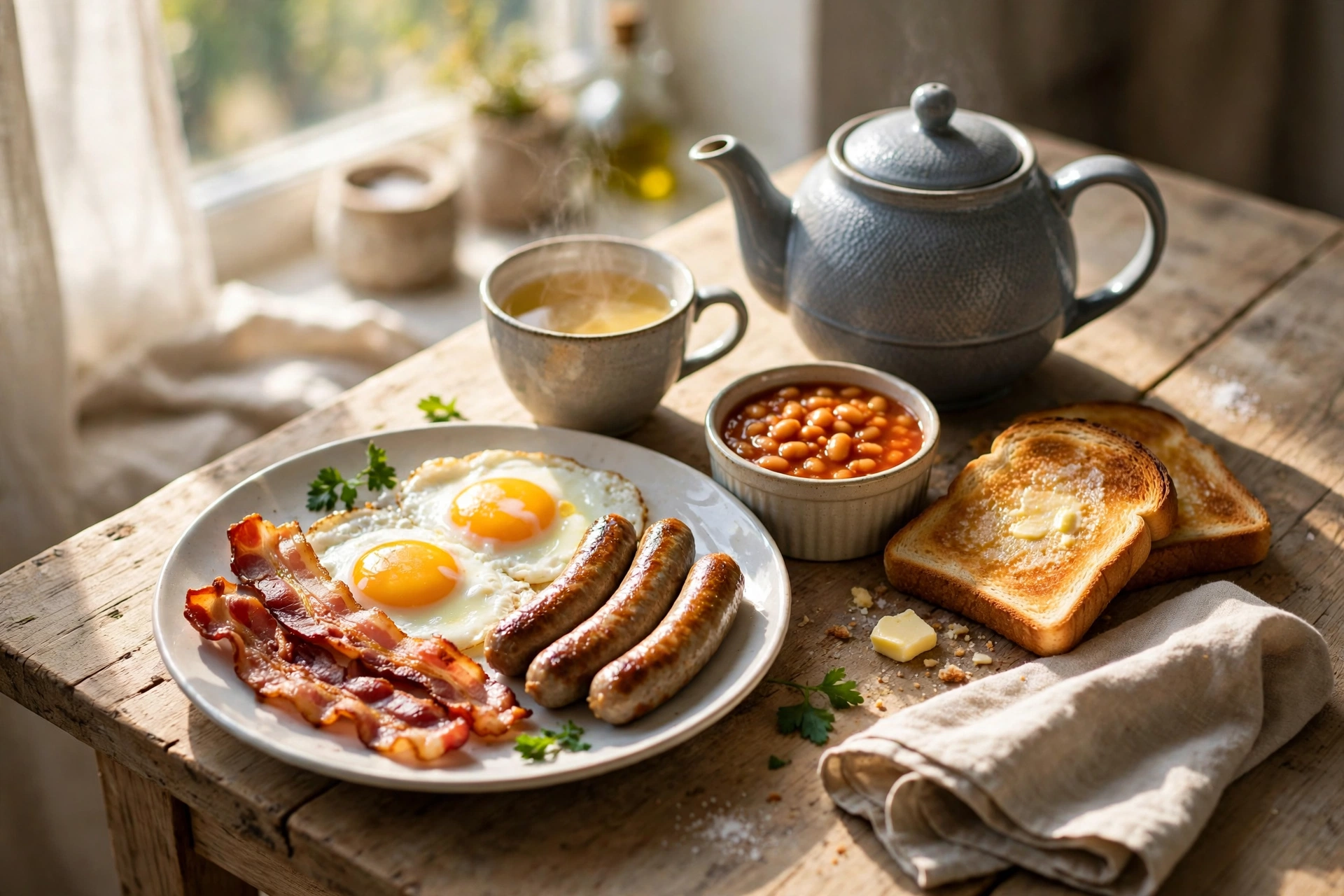
The full English is less a breakfast than a statement of intent. Bacon, sausages, fried or scrambled eggs, baked beans, grilled tomato, mushrooms and toast arrive on one plate, with black pudding in the north and fried bread in the old-school cafés. It began as a hearty meal for working men in Victorian times and became a weekend ritual, the kind of breakfast that needs a pot of tea and a slow morning afterwards. The rules are fiercely argued — beans touching the eggs, HP sauce or ketchup — but the spirit is simple: a plate so full it carries you to lunch. London’s greasy-spoon cafés still do it best, served fast, hot and without ceremony.
Shakshuka — Israel and North Africa
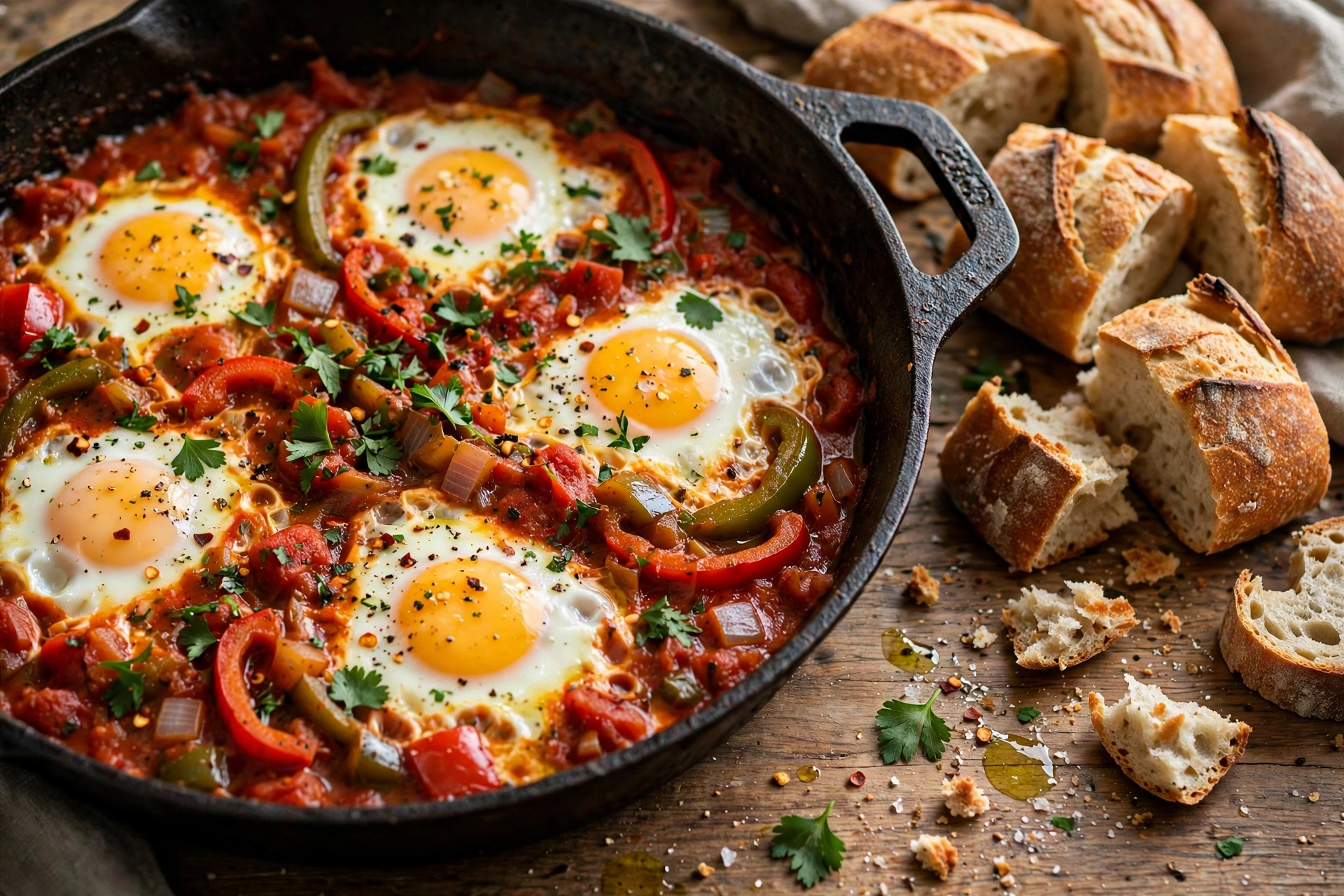
Shakshuka is eggs poached in a pan of simmering tomatoes, peppers, onions and cumin, served straight from the pan with bread for mopping. It came to Israel with North African Jewish immigrants and spread from there to cafés in Tel Aviv, London and New York, where it is now a brunch menu staple. The trick is the sauce: cooked down until it is thick and sweet, spiced just enough to warm you without burning. A good shakshuka has runny yolks, a rich red sauce and a stack of warm bread on the side. Eat it slowly, straight from the pan, and do not be shy about asking for extra bread.
Dim Sum Breakfast — Hong Kong and Guangdong, China
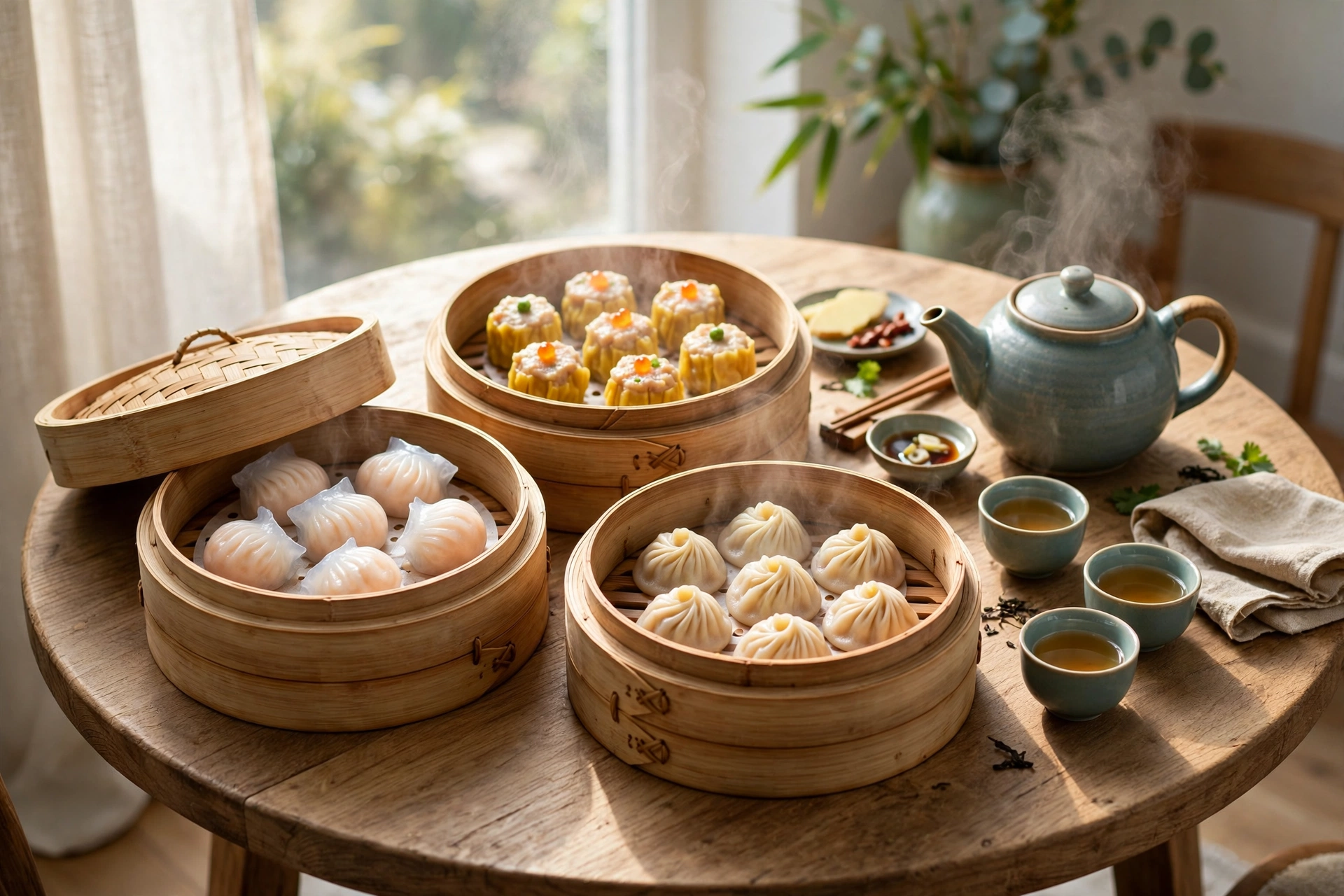
Dim sum breakfast is not one dish but a whole morning of small ones. In Hong Kong, families gather in tea houses for yum cha, ordering steamer baskets of har gow prawn dumplings, siu mai pork dumplings, cheung fun rice rolls and custard buns, all washed down with pot after pot of tea. The baskets arrive on trolleys, you point at what you want, and the table fills up until nobody can eat another bite. It is slow, social and completely delicious, and it turns breakfast into a family event. Go on a Sunday morning, arrive early to beat the queue, and order the har gow first — it is the test of any dim sum kitchen. For more on the region’s cooking, see our guide to the Best Chinese Restaurants in the World.
Croissant and Café au Lait — Paris, France
The French breakfast is famously light: a warm croissant, a bowl or cup of café au lait, maybe a little jam and a glass of orange juice. It sounds too simple to be famous, but a proper Parisian croissant — shattering layers, salty butter, a soft centre — is a small masterpiece, and the French take it very seriously. Bakers start before dawn, and the best croissants sell out by nine. Eat it at a café counter, standing with the regulars, or take it to a park bench with a coffee. It is not a big breakfast, and it is not meant to be. It is a quiet, buttery start to the day, and Paris does it better than anywhere else on earth.
American Pancakes — United States
American pancakes are thick, fluffy and unapologetically sweet. A stack arrives with butter melting down the sides, maple syrup pooling on the plate, and maybe blueberries or bacon on the side. They are a diner classic, cooked on a griddle and served all day, though they taste best on a slow weekend morning. The secret is the batter — buttermilk, baking powder and a light hand — and a hot griddle that gives the outside a golden crust while the inside stays soft. New Orleans does a particularly good line in sweet breakfasts, and our guide to the Famous Food in New Orleans covers beignets and more. Order the short stack if you are sensible; order the full stack if you are hungry.
Chilaquiles — Mexico
Chilaquiles are Mexico’s favourite way to use up yesterday’s tortillas, and the result is far better than it sounds. Crisp tortilla pieces are simmered in red or green salsa until they soften at the edges, then topped with fried eggs, shredded chicken, cheese, cream, onion and coriander. Green salsa gives you a bright, tangy bite; red salsa is deeper and smokier. It is the breakfast Mexico City eats after a late night, and it is also the breakfast that cures one. The trick is timing — the tortillas should be soft but not soggy, and the egg yolk should still run. Eat it with a strong coffee and you will feel human again by the second helping.
Japanese Breakfast — Japan
A traditional Japanese breakfast looks nothing like a Western one, and that is its charm. Grilled fish, usually salmon, sits beside a bowl of steamed rice, miso soup, a small dish of pickles and a rolled omelette called tamagoyaki, with a raw egg or natto for the brave. It is light, balanced and quietly nourishing — protein, rice, soup and vegetables in small, careful portions. Ryokan inns serve it as part of the stay, and it is one of the great pleasures of travelling in Japan. Eat the fish with chopsticks, sip the miso slowly, and notice how full you feel without ever feeling heavy. It is breakfast as a small, calm ritual.
Turkish Breakfast (Kahvaltı) — Turkey
Kahvaltı, the Turkish breakfast, is a table, not a plate. White cheese, aged kaşar, olives, tomatoes, cucumber, jam, honey with clotted kaymak cream, bread, eggs — often menemen, eggs scrambled with tomatoes and peppers — and endless glasses of çay, Turkish tea served in tulip glasses. The word kahvaltı literally means “before coffee”, which tells you how seriously Turks take the meal before the day begins. It is meant to be shared, slowly, with family or friends, and a proper spread can take an hour to finish. Istanbul’s breakfast cafés fill up at weekends, and the best ones serve it until late afternoon. Come hungry and in no hurry.
Congee — China
Congee is rice porridge, cooked low and slow until the grains break down into a silky, comforting bowl. It is China’s breakfast of choice on cold mornings and sick days, and also one of its most versatile: top it with century egg and pork, shredded chicken and ginger, or simply spring onion and soy sauce. Cantonese congee is famously smooth, cooked for hours, while other regions keep it thicker and heartier. It is gentle on the stomach, warming in winter and cheap enough to eat every day. Street vendors and hotel breakfasts both serve it, and a bowl with youtiao — deep-fried dough sticks for dipping — is one of the great simple breakfasts anywhere.
Idli Sambar — South India
Idli sambar is South India’s everyday breakfast and one of the healthiest on this list. Steamed rice cakes, soft and white, are served with sambar, a lentil and vegetable stew, and coconut chutney. The idlis are light and fluffy, the sambar is warm and spiced, and the chutney adds a fresh, cool note. It is eaten across Tamil Nadu, Karnataka, Kerala and Andhra Pradesh, in homes, roadside stalls and grand hotels alike, usually with a filter coffee to follow. The batter is fermented overnight, which gives the idlis their gentle tang. It is the kind of breakfast that fills you up without weighing you down, and it is worth seeking out wherever South Indian food is cooked properly. For more Indian cooking, see our guide to the Famous Indian Restaurants.
Huevos Rancheros — Mexico
Huevos rancheros are a ranch-style breakfast from rural Mexico: fried eggs served on lightly fried corn tortillas, covered in a warm tomato-chilli salsa, with refried beans on the side. It is hearty, spicy and built for a day of hard work, though these days it is just as likely to appear on a brunch menu in Austin or Los Angeles. The eggs should be fried so the yolks stay runny, the salsa should be fresh and warm, and the tortillas should hold their shape under the weight. Add avocado or queso fresco if you like, and eat it with a strong coffee. It is simple food, cooked with confidence, and it is hard to improve on.
Tapsilog — Philippines
Tapsilog is the Philippines’ beloved breakfast plate, named for its three parts: tapa (cured beef), sinangag (garlic fried rice) and itlog (fried egg). The beef is marinated in soy, garlic and sugar, then fried until the edges crisp; the rice is fried with garlic; the egg is sunny-side up, yolk ready to run over everything. It is sold in small eateries called tapsihan, open from dawn, and eaten by everyone from students to taxi drivers. It is salty, garlicky and deeply satisfying, and it explains why Filipinos take breakfast seriously. Order it with a cup of hot chocolate or coffee, and do not rush it.
How to Eat Like a Local
Breakfast is a local habit, so eat it where locals eat it. Go early, when the bread is fresh and the regulars are in. Order what the table next to you is having, and do not be afraid to ask how it is eaten — whether the bread is for dipping, the tea is refilled, or the egg goes on top. A hotel buffet will show you the idea; a neighbourhood café will show you the real thing. And if a breakfast looks small to you, remember that in many countries lunch is the big meal — breakfast is there to wake you up, not to fill you for the day. The dishes on this list also appear in our round-up of World Famous Food Dishes, if you want to keep eating around the world.
If you are travelling, treat breakfast as your scouting trip for the day. A café or market stall will tell you what is fresh, what is in season, and how the city wakes up, all before nine in the morning. Try the local drink too — Turkish tea, Vietnamese coffee, Japanese green tea or a strong filter coffee in South India — because the drink is often half the ritual. And do not skip breakfast to save time; in many of these countries, the morning meal is the one locals protect most, and rushing past it means missing the best part of the day.
Frequently Asked Questions
What is the most famous breakfast in the world?
The full English breakfast is probably the most famous, followed by the American pancake stack and the French croissant. Shakshuka and dim sum are close behind, and all five are recognised far beyond their home countries.
What do people eat for breakfast in Japan?
A traditional Japanese breakfast is grilled fish, steamed rice, miso soup, pickles and a rolled omelette. It is light and balanced, though many Japanese people now eat bread, eggs or cereal on busy weekdays.
Is shakshuka a breakfast dish?
Yes, it started as a breakfast and brunch dish in North Africa and Israel, though it is now eaten at any time of day. Eggs poached in tomato sauce work just as well for dinner as they do for a slow morning.
What is a Turkish breakfast?
Kahvaltı is a spread of cheeses, olives, tomatoes, cucumber, jam, honey, bread and eggs, served with endless small glasses of tea. It is meant to be shared slowly, usually at weekends with family or friends.
Which breakfast on this list is the healthiest?
Idli sambar and the Japanese breakfast are the lightest and most balanced, with steamed or grilled food, vegetables and modest portions. Congee is also gentle, especially with chicken and ginger rather than fried toppings.
Conclusion
Breakfast shows you a country before it has had time to put on a show. The full English is hearty and unhurried, shakshuka is warm and communal, dim sum is a family gathering, and a Paris croissant is a quiet pleasure. Try these twelve wherever you can, but try them early, locally and with an open mind. The best breakfasts are not the fanciest ones — they are the ones that make you want to get up tomorrow and do it all over again.
Keep a list of the breakfasts you have tried, and the ones you still want to try. A slow Turkish kahvaltı on a Sunday, a dim sum morning in Hong Kong, or a stack of pancakes in an American diner are all worth planning a trip around. Breakfast may be the quietest meal of the day, but it is also the most personal — and these twelve are the best place to start.