Famous Noodle Dishes
Noodles are the world’s most democratic food. They are cheap, fast, endlessly variable, and loved on every continent — slurped in a Tokyo ramen bar, twirled in a Roman trattoria, or eaten from a plastic stool on a Bangkok pavement. Famous noodle dishes are famous for a reason: each one is a whole cuisine in a single bowl or plate.
This list covers Asia’s great noodle soups and stir-fries alongside Italy’s two most famous pasta dishes, because noodles and pasta are cousins with the same job — to carry sauce, broth and flavour straight to you. Bring chopsticks, bring a fork, and bring an appetite.
How We Picked These Dishes
We picked noodle dishes that are famous in their home country and recognisable around the world, still cooked the traditional way, and built around a distinct noodle, broth or sauce. A dish had to be something people actually queue for, not just a menu filler. We also wanted a mix of soups, stir-fries and dry noodles, so the list shows how many ways a noodle can be cooked.
- Real fame: dishes known far beyond their home city or country.
- Distinct noodles: each dish uses its own noodle, from ramen to udon to spaghetti.
- Broth and sauce: the liquid or sauce is as important as the noodle itself.
- What locals say: the bowls regulars return for, year after year.
The List: Famous Noodle Dishes
Twelve bowls and plates, from Tokyo to Naples. Some are soups you slurp, some are stir-fries you toss, and all of them are worth travelling for.
Ramen — Japan
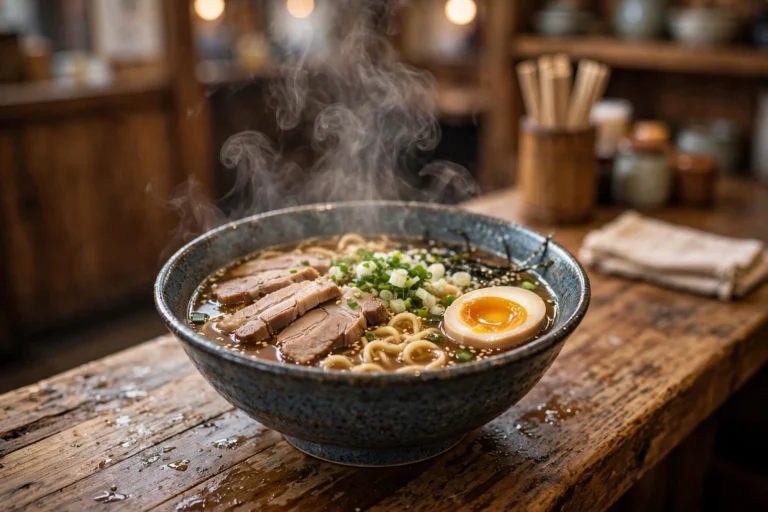
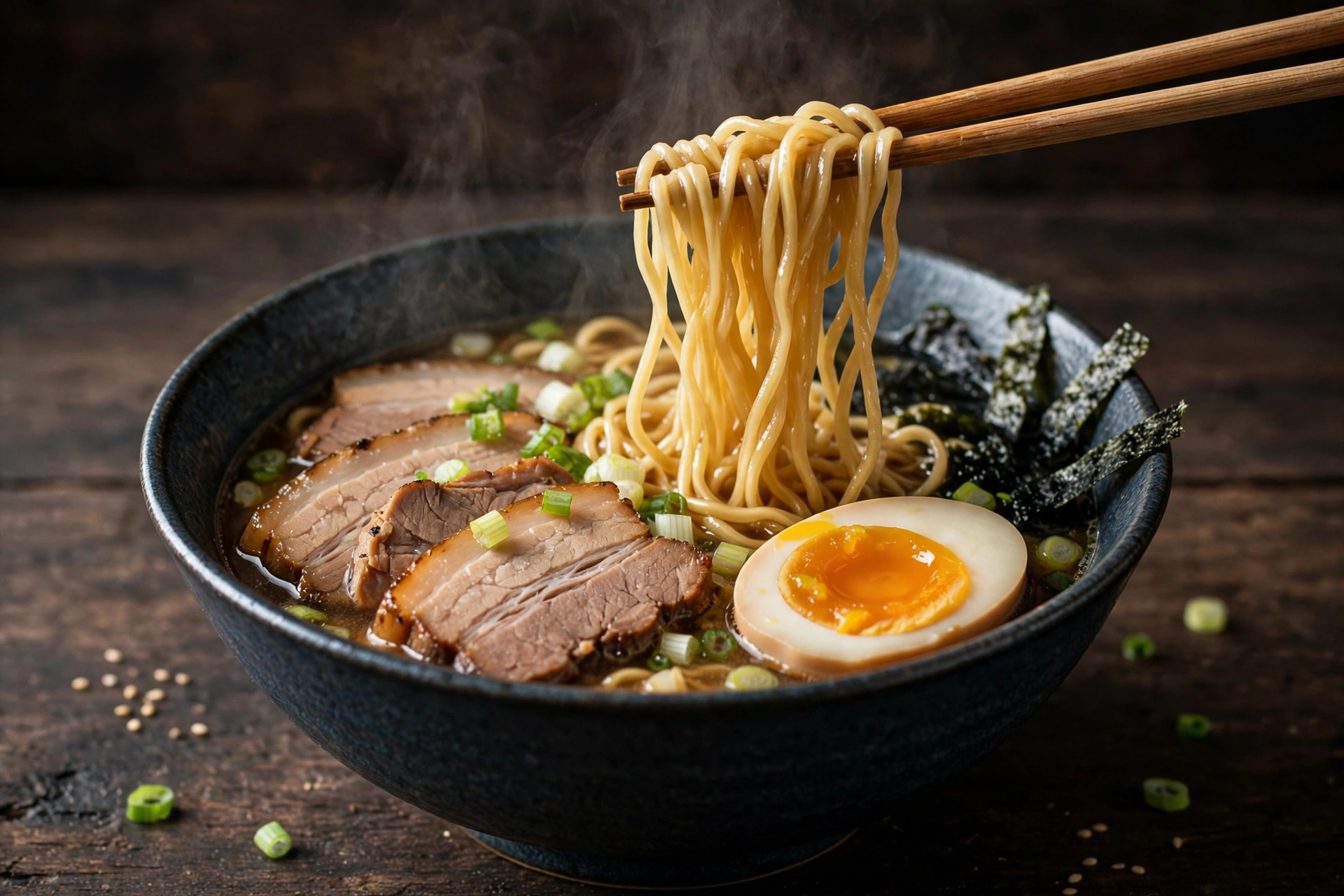
Ramen is Japan’s most famous noodle dish, and also its most argued-over. Wheat noodles swim in a rich broth — tonkotsu pork, shoyu soy, miso or light shio salt — topped with sliced pork, a soft egg, spring onion, nori and bamboo shoots. Each region has its own style: Sapporo’s miso ramen is hearty, Tokyo’s shoyu is clean and savoury, and Fukuoka’s tonkotsu is creamy and intense. Tokyo’s ramen bars are legendary, and our guide to the Best Ramen in Tokyo is the place to start planning. Eat it fast, slurp loudly — it is polite, and it cools the noodles — and finish the broth if you can. A good bowl of ramen is a small, steaming miracle.
Pho — Vietnam
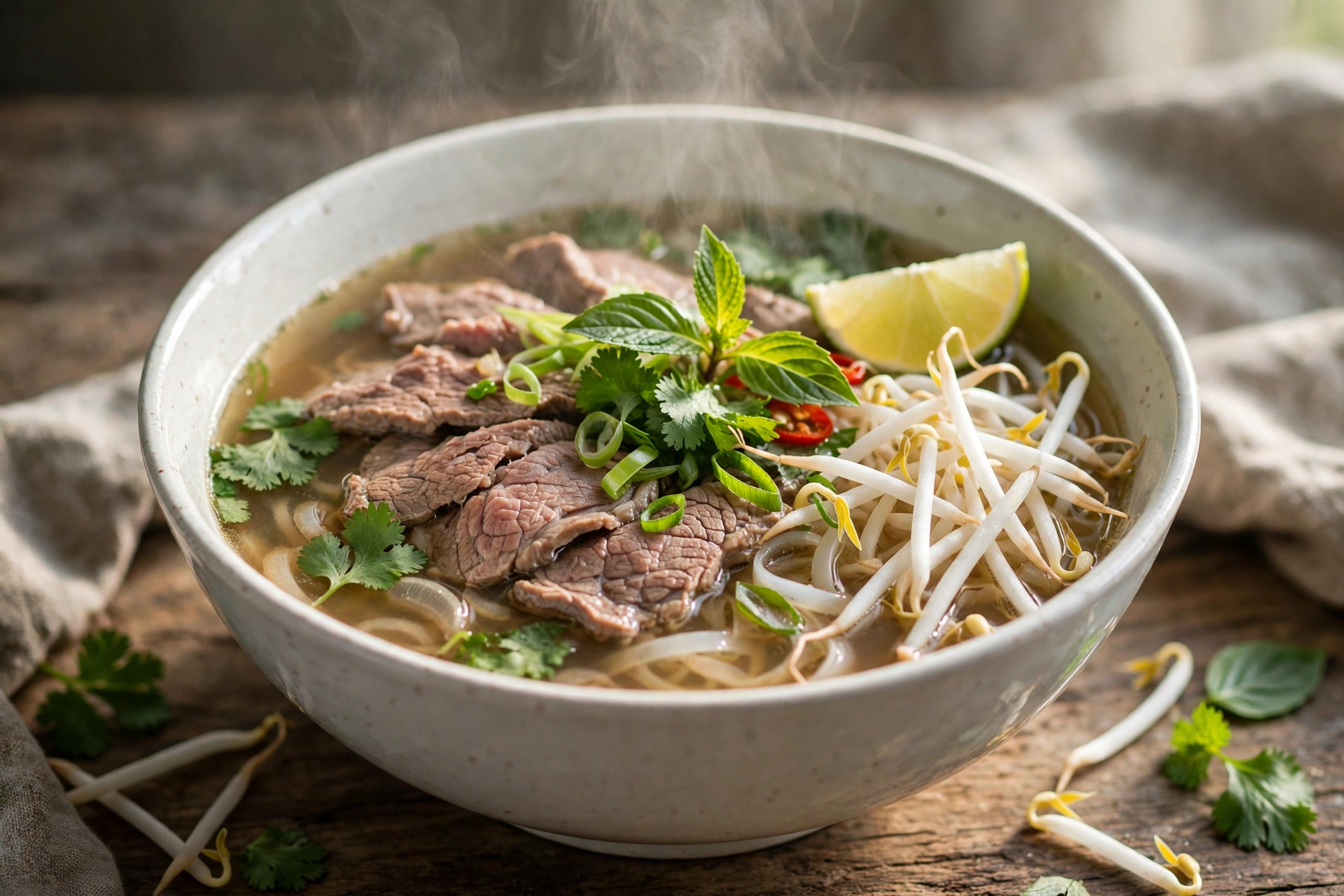
Pho is Vietnam’s national soup, and one of the most comforting bowls on earth. A clear, fragrant beef or chicken broth — simmered for hours with star anise, cinnamon, cloves and charred onion — is poured over flat rice noodles and thin slices of beef, then finished at the table with bean sprouts, Thai basil, lime, chilli and hoisin sauce. Hanoi’s version is cleaner and more austere; Saigon’s is sweeter, with more herbs on the side. It is breakfast in Vietnam, though it works at any hour, and it is the dish that made Vietnamese cooking famous worldwide. Eat it hot, add herbs to taste, and do not be shy with the chilli.
Pad See Ew — Thailand
Pad see ew is Thailand’s great stir-fried noodle dish, and the rival of pad thai for the title of the country’s best. Wide, flat rice noodles are tossed in a screaming-hot wok with Chinese broccoli, egg, and chicken, beef or tofu, in a dark, sweet soy sauce that caramelises on the edges. The noodles should have a little char — wok hei, the breath of the wok — and the sauce should be sweet, salty and just a touch smoky. Bangkok’s street stalls cook it to order in about two minutes, and it is best eaten the moment it leaves the wok, with a spoonful of chilli vinegar on the side. For more Bangkok street cooking, see our guide to the Best Street Food in Bangkok.
Laksa — Malaysia and Singapore
Laksa is a spicy noodle soup that shows off Southeast Asia’s love of coconut, curry and chilli. In curry laksa, wheat or rice noodles sit in a rich coconut curry broth with chicken, prawns, tofu puffs and bean sprouts; in Penang’s asam laksa, the broth is a sour fish soup with tamarind, mint and pineapple. Singapore and Malaysia both claim it, and both are right — each city has its own version, and locals will defend theirs fiercely. The broth is the star: creamy, spicy and fragrant, with a spoonful of sambal on top for those who like heat. Eat it with a spoon in one hand and chopsticks in the other, and finish every drop.
Spaghetti Carbonara — Rome, Italy
Spaghetti carbonara is Rome’s most famous pasta, and also its most misunderstood. The real thing has no cream: just spaghetti, guanciale (cured pork cheek), egg yolks, Pecorino Romano and black pepper, tossed together so the heat of the pasta turns the egg and cheese into a silky sauce. It is rich, salty and peppery, and it takes about fifteen minutes to cook — which is why Roman trattorias guard their method so jealously. Rome’s pasta rooms do it best, and our guide to the Best Pasta Restaurants in Rome lists the places to try it. Ask for cream in a Roman carbonara and you will get a look that says everything.
Dan Dan Noodles — Sichuan, China
Dan dan noodles are Sichuan in a bowl: wheat noodles in a spicy, nutty sauce of chilli oil, Sichuan pepper, sesame paste and minced pork, topped with spring onion and pickled vegetables. The name comes from the carrying pole — dan dan — that street vendors used to carry their pots and noodles through Chengdu. The first bite is salty and savoury; then the chilli oil warms you, and the Sichuan pepper leaves a gentle tingle on your tongue. Mix everything together before you eat, so every strand is coated. It is a small bowl with a big personality, and it is addictive in the best way.
Udon — Japan
Udon are thick, chewy wheat noodles, and Japan treats them with the reverence they deserve. In Kagawa prefecture, the home of sanuki udon, they are served in a light dashi broth with tempura, or cold with a dipping sauce in summer. The noodles should be springy and firm, with a bite that is almost chewy, and the broth should be clear and delicate. Udon shops are often simple, self-service places where you point at your toppings and carry your bowl to a counter. It is comfort food at its purest — warm, filling and quietly perfect on a cold day.
Lo Mein — China
Lo mein is the Chinese stir-fried noodle dish that became a takeaway classic around the world. Soft egg noodles are tossed with vegetables, meat or prawns, and a savoury soy-based sauce, cooked quickly so the noodles stay springy and the vegetables stay crisp. The name means “tossed noodles”, and that is exactly what it is — everything tossed together in a hot wok until the sauce coats every strand. In China it is a quick, everyday meal; abroad it is the dish that introduced millions of people to Chinese noodles. A good lo mein is glossy, garlicky and eaten straight from the box or the plate, with chopsticks and no ceremony.

Japchae — Korea
Japchae is Korea’s celebration noodle dish, served at birthdays, holidays and family gatherings. Sweet potato starch noodles — glassy, chewy and almost translucent — are stir-fried with beef, mushrooms, spinach, carrots and peppers in a sweet soy and sesame sauce, then sprinkled with sesame seeds. The noodles should be springy, not mushy, and the vegetables should still have a little bite. It is usually served at room temperature as part of a larger spread, and it is the dish everyone reaches for first. Japchae shows the Korean love of balance: sweet, savoury, nutty and fresh, all in one plate.
Tom Yum Noodle Soup — Thailand
Tom yum noodle soup takes Thailand’s most famous soup and turns it into a full meal. Rice noodles sit in a hot, sour broth flavoured with lemongrass, galangal, lime leaves, chilli and lime juice, with prawns or chicken, mushrooms and herbs on top. The broth is the star: sour first, then spicy, then fragrant, with a warmth that builds as you eat. Bangkok’s noodle shops serve it with a choice of noodle and protein, and the best ones let you adjust the sourness and heat to taste. It is the soup to order when you want something bold, and it is a fine cure for a cold day or a late night.
Spaghetti Bolognese — Bologna, Italy
Spaghetti bolognese is famous everywhere, though in Bologna itself the sauce — ragù — is traditionally served with tagliatelle, not spaghetti. The real ragù is a slow-cooked meat sauce of beef, pork, onion, carrot, celery, tomato and a splash of milk or wine, simmered for hours until it is rich and deep. Abroad, the spaghetti version became a weeknight staple, and it is still one of the most cooked dishes in the world. The key is time: a proper ragù cannot be rushed, and the sauce should cling to the pasta rather than pool at the bottom of the plate. Serve it with Parmesan, a green salad and a glass of red wine.
Soba Noodles — Japan
Soba are buckwheat noodles, and Japan has been eating them for centuries. They are served hot in a dashi broth with tempura or duck, or cold on a bamboo tray with a dipping sauce, a dab of wasabi and sliced spring onion — the summer version, zaru soba, is one of the most refreshing meals in Japanese cooking. Good soba has a nutty, earthy flavour and a firm bite, and the best shops make their noodles by hand each morning. Slurp them — it is expected — and drink the hot soba water, soba-yu, at the end, mixed with the leftover dipping sauce. It is a quiet, elegant meal, and a world away from instant noodles.
How to Eat Like a Local
Noodle etiquette is simple: slurp in Japan, twirl in Italy, and use chopsticks and a spoon together in Southeast Asia. Order the house special first — it is usually the dish the kitchen is proudest of — and eat noodles the moment they arrive, before the broth cools or the stir-fry goes soft. In a ramen bar, sit at the counter and watch the cooks work; in a Bangkok stall, point at the noodles you want and let the vendor decide the rest. And remember that the broth matters as much as the noodle: finish it if you love it, and say so. The best noodle meals are fast, hot and eaten without fuss.
A few habits make noodle meals better. Order the house special on your first visit, and ask the cook how spicy it is before you commit. In a ramen bar, eat quickly while the noodles are still firm; in a Bangkok stall, add chilli vinegar a little at a time until the balance is right. Carry tissues, because a good noodle soup is a messy business, and do not feel shy about asking for extra herbs or lime. The cooks who make these dishes every day are happy to guide you — and they can tell, in one look, whether you are ready for the spicy version.
Frequently Asked Questions
What is the most famous noodle dish in the world?
Ramen is probably the most famous, thanks to its global popularity and the endless regional styles in Japan. Pho, pad thai and spaghetti carbonara are close behind, and all four are known on every continent.
Is it rude to slurp noodles?
In Japan it is polite — slurping cools the noodles and shows you are enjoying them. In Italy, twirling spaghetti on a fork is the norm, and cutting it is frowned on. In most of Southeast Asia, a little noise is fine and nobody will mind.
What is the difference between ramen and pho?
Ramen uses wheat noodles in a rich, often creamy broth with pork, egg and nori. Pho uses flat rice noodles in a clear, fragrant beef or chicken broth with herbs, bean sprouts and lime. Both are noodle soups, but they taste completely different.
Are noodle dishes healthy?
It depends on the dish. Soba, pho and udon in a light broth are fairly light, while tonkotsu ramen and pad see ew are richer. Adding vegetables and choosing a clear broth over a creamy one keeps things lighter.
Which noodle dish should I try first?
Start with ramen if you love rich soups, pho if you prefer something light and fragrant, and pad see ew if you want a stir-fry. All three are widely available, and each one is a good introduction to its country’s cooking.
Conclusion
Noodles are proof that simple food can be great food. A bowl of ramen, a plate of pad see ew or a forkful of carbonara can carry the whole flavour of a country in a single mouthful. Work through these twelve, slurp where slurping is welcome, twirl where twirling is the rule, and remember that the best noodle dish is usually the one cooked by someone who has made it a thousand times before. The broth, the wok and the hands behind them are what make a noodle dish famous — and what will keep you coming back for another bowl.
Start with the bowl nearest you, then work through the rest on your travels. A ramen bar in Tokyo, a pho stall in Hanoi, a wok in Bangkok or a trattoria in Rome will each teach you something different about noodles — and about the people who cook them. The best noodle dishes are simple, honest and made to be eaten hot, fast and with joy. Slurp, twirl, and go back for another bowl.