Best Street Food in Hanoi
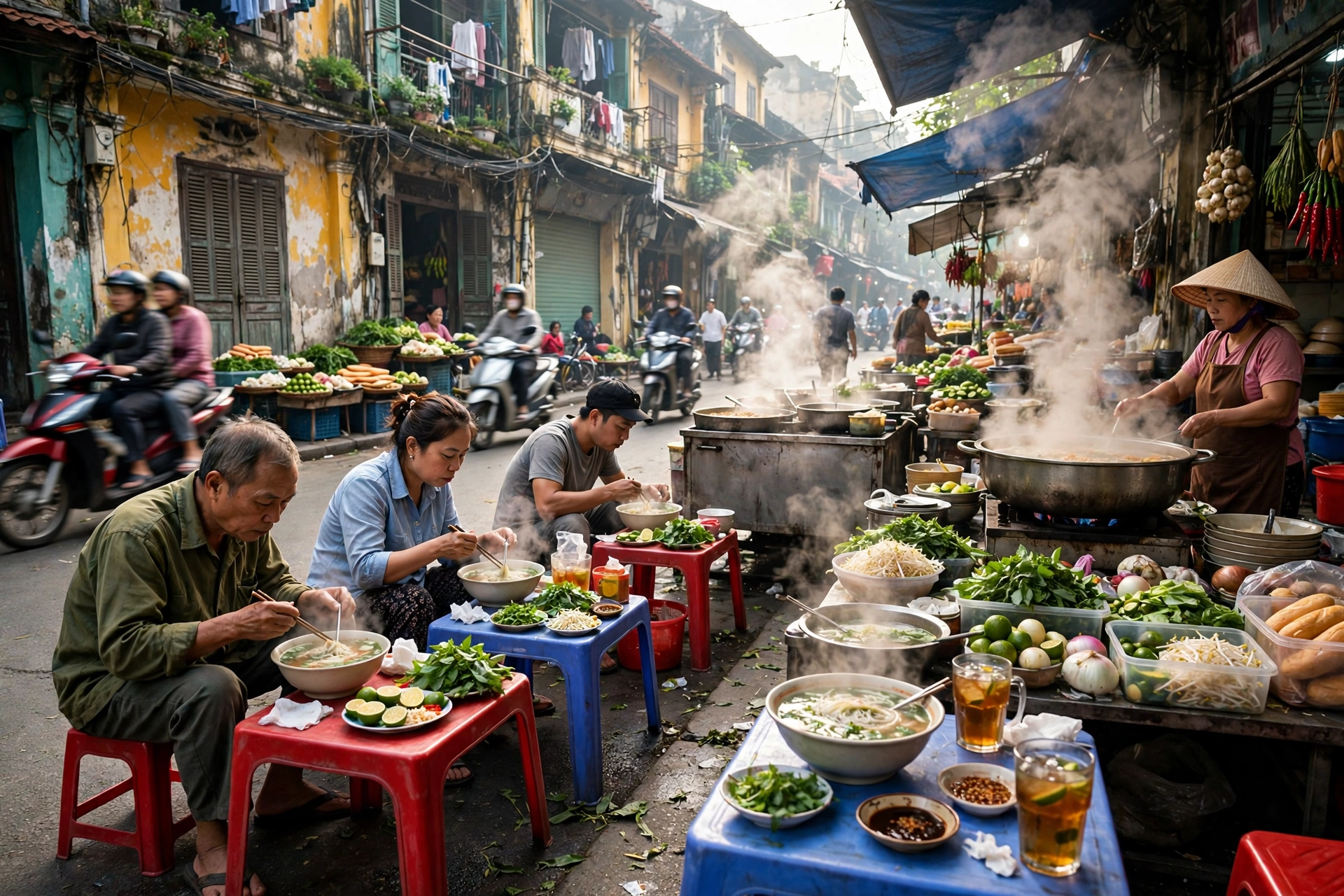
Hanoi is the best street food city I’ve ever eaten in, and it’s not close. The whole city is a restaurant. Every sidewalk has a tiny plastic stool with your name on it, every corner has a pot of broth that’s been simmering since dawn, and the best meal you’ll have in Vietnam will probably cost less than three dollars. That sounds like an exaggeration until you’ve had it.
The thing about Hanoi’s street food is that it’s not a tourist show. The vendors cooking phở at 6am are cooking for their neighbours, not for you, and that’s exactly why it’s so good. You sit on a stool that’s too small for you while motorbikes stream past, and you realise nobody here has ever needed a white tablecloth to make extraordinary food.
This guide covers ten places and dishes that define Hanoi street food, how to order without speaking Vietnamese, and how to eat well on a few dollars a day.
What Makes Hanoi’s Food Scene Special
Hanoi’s food is shaped by its history in a way few cities can match. A thousand years of Chinese influence, a century of French rule, and a fiercely independent Vietnamese spirit all show up on the plate. The French left the baguette, which became the bánh mì; the Chinese left noodle soups, which became phở; and the Vietnamese turned all of it into something entirely their own — fresh herbs, clear broths, grilled meats, and a balance of salty, sweet, sour and spicy in every bite.
The other thing that makes Hanoi special is how specific it is. A dish here isn’t just a dish; it belongs to a street, a family, and a time of day. Phở is breakfast. Bún chả is lunch. Egg coffee is the afternoon. Vendors often sell one dish, made the same way for decades, and they do it better than any restaurant could, because they’ve spent a lifetime on it. That focus is the secret.
And then there’s the setting. Eating on the street in Hanoi isn’t a budget option or a novelty — it’s the default. Office workers, students, grandmothers, and tourists all sit on the same small stools, and the food is the great equaliser. If you want a broader street food picture across Southeast Asia, our Best Street Food in Bangkok is a good companion.
How We Picked These Spots
Every place on this list is famous for a reason, and every one of them is somewhere locals actually eat. I skipped the tourist restaurants in the Old Quarter that serve a bit of everything and do none of it well. Instead, these are the specialists: the phở shop that’s been on the same street for decades, the bún chả stall that fed a US president, the egg coffee cafe that started in the 1940s.
Prices are in Vietnamese dong and US dollars as a rough guide — most dishes here cost 30,000–60,000 VND, which is about $1.20–2.40. Bring cash and order by pointing or by saying the dish name. Eat early for phở and at midday for bún chả.
Phở Bát Đàn
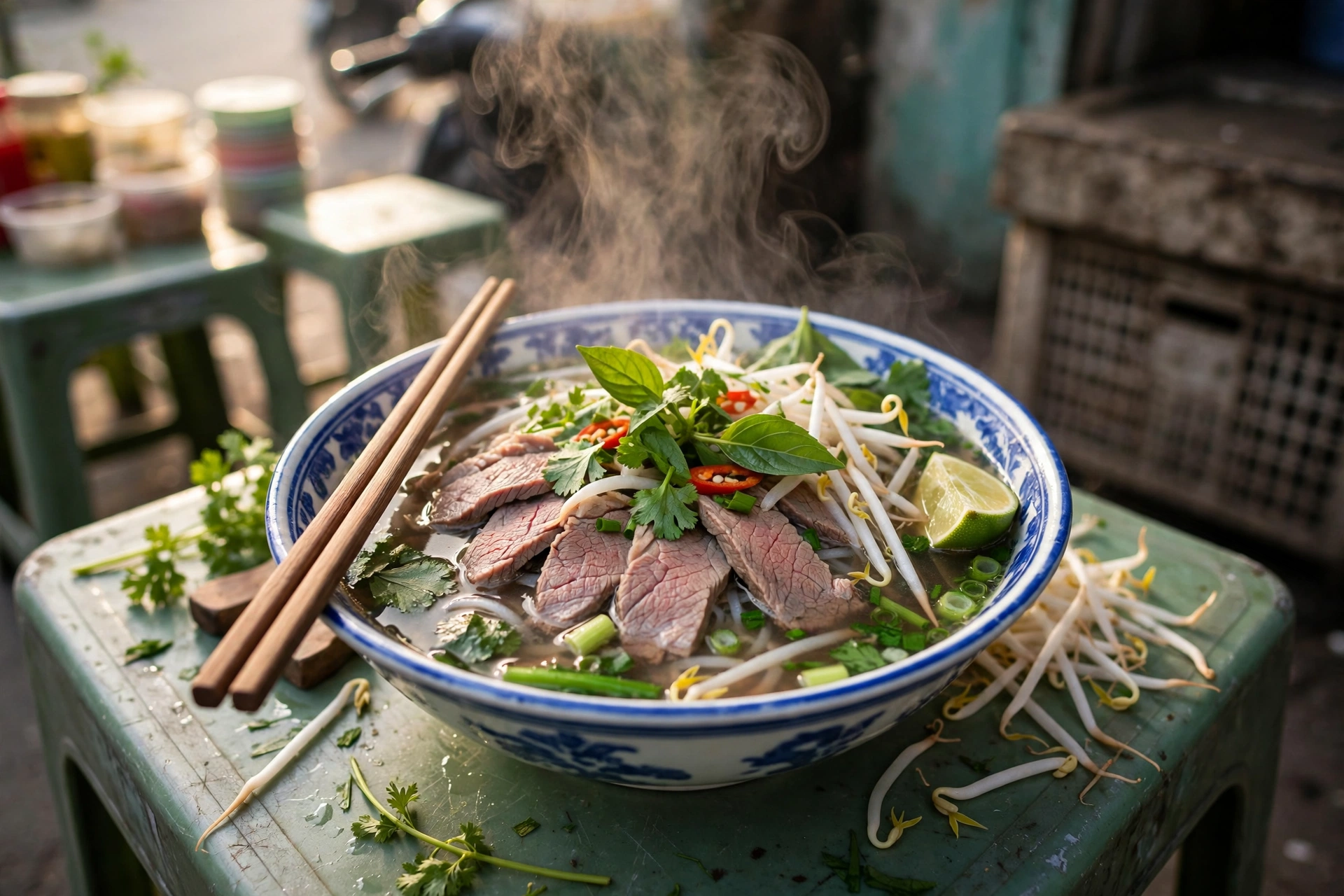
Phở Bát Đàn is a Hanoi institution, and if you ask locals where to get the best phở in the city, this is the name that comes up most. The shop on Bát Đàn Street has been serving since the 1960s, and the queue is part of the experience: you order at the counter, pay, collect your bowl, and find a seat in the small, steamy room. It’s efficient, it’s chaotic, and the phở is superb.
The broth is the star — clear, rich, and deeply beefy, with star anise and cinnamon humming underneath. The beef is sliced thin and cooked in the broth itself, and the noodles are fresh and springy. A bowl costs around 50,000 VND, about two dollars. Add herbs, chilli, and lime to taste. Go before 8am if you want a seat without waiting, and don’t be surprised if the shop sells out by late morning. That’s normal for the good ones.
Bún Chả Hương Liên
Bún chả Hương Liên became world-famous in 2016 when Barack Obama sat down here with Anthony Bourdain, ate bún chả, and drank beer on a plastic stool. The restaurant on Lê Văn Hưu Street has been busy ever since, but the food is the same as it was before the cameras arrived: grilled pork patties and slices over charcoal, served in a sweet-sour broth with rice vermicelli, herbs, and garlic.
Bún chả is a lunch dish, and the best time to eat it is between 11am and 1pm, when the charcoal is at its hottest and the pork is at its smokiest. A portion costs around 50,000–60,000 VND. You drop the noodles and herbs into the broth, take a bite of pork, and repeat. It’s one of the great lunches in the world, and it’s about two dollars.
Chả Cá Lã Vọng
Chả cá Lã Vọng is the oldest restaurant in Hanoi, founded in 1871, and it serves exactly one dish: chả cá, turmeric-marinated fish fried at your table with dill and spring onions, eaten with rice vermicelli, peanuts, and shrimp paste. The restaurant on Cha Ca Street is small and old, with wooden tables and a dining room that looks like it hasn’t changed in decades. It hasn’t, and that’s the point.
The fish is fried in a pan at your table, and you assemble each bite yourself: noodles, fish, dill, peanuts, a little shrimp paste if you’re brave. A portion costs around 150,000–180,000 VND, which makes it one of the pricier meals on this list, but it feeds two comfortably. The dish is so famous that the street is named after it. Don’t skip the dill — it’s not a garnish, it’s half the flavour.
Bánh Mì 25
Bánh Mì 25, on Hàng Cá Street in the Old Quarter, is one of Hanoi’s best-known bánh mì shops, and the queue outside tells you why. The baguette is crisp and light — a legacy of the French, but lighter and airier than anything in Paris — and it’s filled with pâté, pork, pickled vegetables, cucumber, coriander, and chilli. It’s a sandwich, but it’s also a perfect summary of Hanoi’s food history.
A bánh mì here costs around 30,000–40,000 VND, and the classic pork version is the one to order. The shop is small, so most people eat standing on the street or take it away. The Hanoi version is less sweet and more savoury than the southern style — and this is one of the best places to taste the difference.
Bún Bò Nam Bộ
Bún Bò Nam Bộ, on Bún Bò Nam Bộ Street in the Old Quarter, is another one-dish wonder: stir-fried beef with lemongrass over rice vermicelli, topped with crushed peanuts, fresh herbs, bean sprouts, and fried shallots, all tossed with a sweet-sour fish sauce dressing. The restaurant is a single room with low tables and plastic stools, and it has been serving this dish for decades.
The genius of the dish is the contrast — hot beef, cool herbs, crunchy peanuts, and the sharp, sweet dressing that ties it all together. A bowl costs around 50,000–60,000 VND. You mix it all together before eating. If you only try one noodle dish that isn’t phở, make it this one.
Xôi Yến
Xôi Yến, on Nguyễn Hữu Huân Street, is Hanoi’s go-to for xôi — sticky rice — and it’s open late, which makes it a favourite with night owls and late workers. The sticky rice comes in a dozen varieties: topped with shredded chicken, pork floss, Chinese sausage, fried shallots, mung bean paste, or a fried egg. It’s comfort food, Hanoi style, and it’s very good.
A portion costs 25,000–50,000 VND depending on the toppings, and the chicken and egg version is the classic order. The shop is busy from early morning until well past midnight, and it’s a great stop after an evening wandering the Old Quarter. Xôi is a breakfast food for most Hanoians, but Xôi Yến proves it works any time. Eat it hot, with chilli sauce if you like heat, and don’t be shy about ordering a second portion.
Cà Phê Giảng
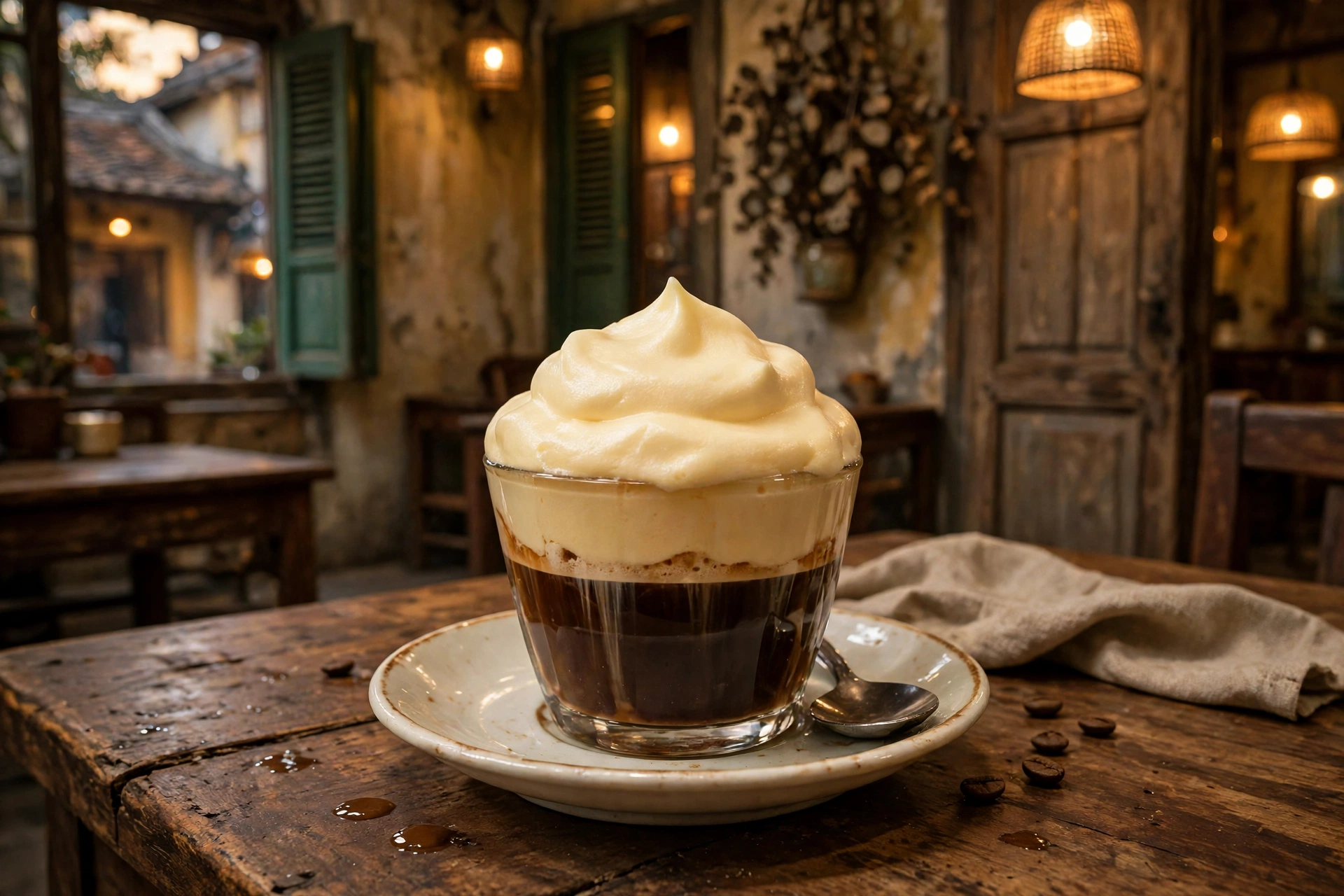
Cà Phê Giảng is where egg coffee was invented, and it’s one of the most famous cafes in Hanoi. The story goes that in 1946, the founder, Nguyễn Văn Giảng, ran short of milk and whisked egg yolks with sugar and condensed milk instead, spooning the thick, sweet foam over strong Vietnamese coffee. It worked, and the drink has been a Hanoi icon ever since.
The cafe on Nguyễn Hữu Huân Street is a narrow, old building with tiny rooms on several floors. An egg coffee costs around 25,000–30,000 VND, about a dollar, served hot or iced. The foam is rich and custardy, and the coffee underneath is strong and dark. It’s sweet, so go easy if you don’t have a sweet tooth.
Phở Gà Nguyệt
Phở Gà Nguyệt, on Phủ Doãn Street, is the chicken phở specialist, and it’s the place to go when you want phở but fancy something lighter than beef. The chicken is free-range, the broth is clear and fragrant, and the shop has a loyal following of locals who come here specifically for the gà — chicken — version. It’s open early and it closes when the chicken runs out, usually by late morning.
A bowl costs around 45,000–55,000 VND. Order the phở gà đùi if you like dark meat, or phở gà lườn for breast. The shop adds a squeeze of lime, fresh herbs, and a spoonful of chilli sauce to finish. Chicken phở is less famous than the beef version, but many Hanoians prefer it — the broth is cleaner, the chicken is more delicate, and it feels like a proper breakfast. Get here before 9am for the best chance of a seat.
Bánh Cuốn Thanh Vân
Bánh Cuốn Thanh Vân, on Hàng Gà Street, serves bánh cuốn — steamed rice rolls — and it’s one of the best places in the Old Quarter to try them. The rolls are made fresh to order: a thin sheet of rice batter is steamed, filled with minced pork and wood ear mushrooms, then rolled and cut, served with fried shallots, herbs, and a warm fish sauce for dipping. Watching them being made is half the fun.
A portion costs around 30,000–40,000 VND. The rolls are soft, delicate, and surprisingly filling, and the warm dipping sauce is essential — dip, don’t pour. The shop is small and busy in the mornings, and it’s a classic Hanoi breakfast.
Bún Riêu Cua Hàng Lược
Bún riêu is one of Hanoi’s great soups, and the stall on Hàng Lược Street is a favourite for it. The broth is made with crab — a rich, tomato-red soup with a distinctive tang — served over rice vermicelli with crab cakes, fried tofu, tomatoes, and a mountain of fresh herbs. It’s sour, savoury, and deeply comforting, and it’s a dish that most visitors never try, which is a shame.
A bowl costs around 40,000–50,000 VND. The crab flavour is strong, and the tomatoes give the broth its colour and brightness. Eat it with the herbs on the side. Bún riêu is a morning dish, so go before 10am.
Eating on a Budget
Hanoi is one of the cheapest great food cities in the world — you can eat extraordinarily well on $10–15 a day. Most street dishes cost $1–3, a bánh mì is about $1.50, and an egg coffee is a dollar. A full day of eating rarely tops $15.
The trick is to eat where the locals eat — the busiest stall is usually the best one. Bring cash in small notes, because most vendors don’t take cards, and don’t fear the plastic stools. A glass of bia hơi, the fresh draft beer sold on street corners, costs about 10,000 VND. For another Asian food city on a budget, see our Best Ramen in Tokyo guide, and Best Tacos in Los Angeles proves you don’t need to leave the US for great street food either.
Tips for First-Time Visitors
First, eat at the right time. Phở is breakfast, bún chả is lunch, and many of the best stalls close when they sell out — often by early afternoon. If you want the good stuff, eat early. Second, don’t worry about the language. Point at what someone else is eating, or just say the dish name. Vendors are used to it, and a smile covers a lot.
Third, sit down. The plastic stools look uncomfortable, but they’re fine, and sitting is how you become part of the street rather than a spectator. Fourth, be careful with the traffic — sidewalks are often full of tables, so cross slowly and steadily, and the motorbikes will flow around you. Finally, carry small notes and hand sanitiser.
Frequently Asked Questions
Is Hanoi street food safe to eat?
Yes, generally. Eat at busy stalls with high turnover — the food is cooked fresh and the ingredients turn over fast. Stick to cooked food and bottled water, avoid ice from unknown sources, and carry hand sanitiser. Most visitors eat street food for days without any problems.
What is the most famous street food in Hanoi?
Phở is the most famous, and Phở Bát Đàn is the classic place to try it. Bún chả is a close second, especially since Bún Chả Hương Liên became famous after Barack Obama’s visit. Both are essential Hanoi experiences.
How much does street food cost in Hanoi?
Very little. Most dishes cost 30,000–60,000 VND, roughly $1.20–2.40. A bánh mì is about $1.50, an egg coffee is about a dollar, and a full day of eating rarely costs more than $10–15.
Do I need Vietnamese to order street food?
No. Pointing works fine, and most vendors in the Old Quarter are used to tourists. Learning a few words helps — “phở bò” for beef phở, “bún chả” for grilled pork noodles — but a smile and a gesture will get you fed anywhere.
When is the best time to eat street food in Hanoi?
Early morning for phở and bánh cuốn, midday for bún chả, and late afternoon for snacks and coffee. Many stalls close when they sell out, so the best food is often gone by early afternoon. Eat early and eat often.
Conclusion
Hanoi’s street food isn’t a side attraction — it’s the main event. The city feeds you on plastic stools, on busy corners, in tiny rooms that have served one dish for decades. Start with phở at Bát Đàn, have bún chả for lunch at Hương Liên, finish with an egg coffee at Giảng, and you’ll understand why people come back to Hanoi just to eat. Bring cash, bring an appetite, and sit down wherever the locals are sitting.