Best Restaurants in Toronto
Toronto doesn’t get the food credit it deserves. People talk about New York, they talk about Montreal, and Toronto sits there quietly feeding four million people from about two hundred different cultures. The result is one of the most diverse food cities in North America — and one of the most underrated. You can eat your way around the world here without leaving the subway map.
I’ve eaten in Toronto on several trips, and what keeps impressing me is the range. There’s a fine-dining room that ranks among the best in Canada, a market hall that’s been feeding the city since 1803, and neighbourhood restaurants doing Thai, Italian, Japanese, and Portuguese food at a level that would make those countries proud. The city rewards the curious eater.
This guide covers ten places I’d actually recommend, what to order, what it costs in Canadian dollars, and how to plan your eating around the city.
What Makes Toronto’s Food Scene Special
Toronto’s food scene starts with its people. More than half the city’s residents were born outside Canada, and that shows up on every street. Kensington Market has Caribbean, Latin American, and Middle Eastern food within a few blocks. The Danforth is Greek. Little Italy is Italian. Little India is on Gerrard Street. And the downtown core has some of the best Chinese and Japanese restaurants in the country. Toronto doesn’t have one food identity — it has dozens, and they’re all taken seriously.
The other thing that makes Toronto special is its ingredients. Ontario farms supply the city’s restaurants with excellent produce, Lake Ontario and the Atlantic coast provide the seafood, and the city’s markets — especially St. Lawrence — connect chefs directly with growers and butchers. The farm-to-table idea isn’t a trend here; it’s just how the good restaurants have always worked.
And the city has grown up a lot in the last decade. Toronto now has restaurants that belong in any conversation about the best in North America, and a new generation of chefs who grew up in the city’s immigrant kitchens and are cooking food that’s entirely their own. If you like this kind of multicultural eating, our Best Restaurants in Paris shows a different kind of diversity, and Famous New York Restaurants is the obvious comparison — same scale, different flavour.
How We Picked These Spots
These ten places made the list because they’re consistently excellent, they show different sides of Toronto, and they’re places I’d spend my own money. There’s fine dining, a market hall, and neighbourhood favourites, and every one of them is somewhere locals actually eat — not a tourist trap with a view. I skipped places that coast on reputation and places that are hard to get into without a connection.
Prices are in Canadian dollars and reflect recent menus. Fine dining runs $150–300 per person for a tasting menu, while a great neighbourhood meal is $40–80. Book ahead for the big names — Alo, in particular, books out weeks in advance — and show up early for the walk-in spots. Toronto restaurants are generally relaxed about dress, but the fine-dining rooms expect smart casual.

Alo
Alo is the best restaurant in Toronto, and it’s not a close call. Chef Patrick Kriss’s tasting-menu restaurant on Spadina Avenue has held the top spot in Canada for years, and it earns it: precise, creative cooking in a calm, elegant room, with service that’s warm rather than stiff. The dining room is small and intimate, and the whole evening feels like a special occasion.
The tasting menu runs around $200 per person, and it changes with the seasons — expect ten or so courses built around the best Ontario produce and top-quality seafood and meat. The wine pairing is excellent if you want it, and the cocktail bar upstairs, Aloette, is a great spot for a drink before or after. Book well ahead — weeks, not days — and note that the restaurant releases tables on a rolling basis. If you only have one big dinner in Toronto, this is the one.
Canoe
Canoe sits on the 54th floor of the TD Bank Tower, and the view is the first thing you notice: the whole city spread out below you, the lake stretching to the horizon, and the CN Tower rising nearby. But the food is the real reason to come. The menu is proudly Canadian — Ontario produce, Great Lakes fish, and ingredients from across the country — and the kitchen does them justice.
Mains run $45–70, and the tasting menu is around $150 per person. The dishes change seasonally, but the Ontario ingredients are always the focus. Canoe is a great pick for a first night in Toronto: you get the view, the food, and a proper introduction to Canadian cooking. Book a window table and arrive before sunset — the light over the lake at dusk is something else.
St. Lawrence Market
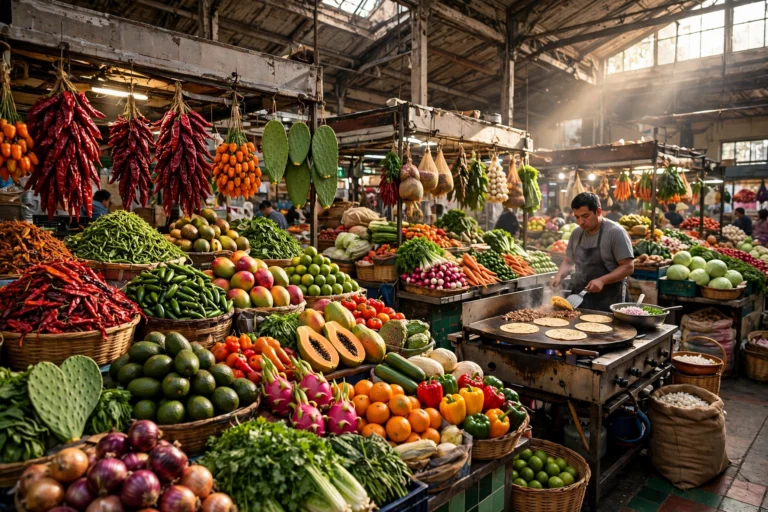
St. Lawrence Market has been feeding Toronto since 1803, and it’s the heart of the city’s food life. The South Market building on Front Street holds more than a hundred vendors — butchers, bakers, cheese sellers, fishmongers, and produce stalls — and the Saturday farmers’ market in the North Market building is one of the best in Canada. It’s not a restaurant, exactly, but it’s the single best place to eat in the city.
Come hungry and graze. The peameal bacon sandwich — Toronto’s signature, a thick slice of cured pork loin rolled in cornmeal, served on a bun — is the thing to try first; Carousel Bakery and Paddington’s Pump are the two most famous stalls. A full grazing lunch costs $15–25. The market is closed Sundays and Mondays, so plan around that, and go early on Saturday for the farmers’ market.
Pai
Pai, on Duncan Street in the Entertainment District, is Toronto’s best-known Thai restaurant, and it’s the kind of place that makes you rethink what Thai food can be. The chef, Nuit Regular, grew up in northern Thailand, and the menu is built around the food of her home region — bold, spicy, and nothing like the pad thai and green curry most people know.
The khao soi — a rich coconut curry noodle soup from Chiang Mai — is the dish to order, along with the papaya salad and the grilled chicken. Dishes run $16–28, and a meal for two usually comes to $60–80. Pai is popular, so expect a wait at peak times; the restaurant doesn’t take reservations for small parties, so arrive early or be ready to queue. It’s worth it. This is the kind of restaurant that turns a casual dinner into the highlight of a trip.

Richmond Station
Richmond Station, on Richmond Street West, is a neighbourhood restaurant that punches well above its weight. The room is warm and unpretentious, the menu changes with the seasons, and the kitchen has a real talent for making simple ingredients taste extraordinary. It’s the kind of place Toronto locals recommend when you ask where they actually eat.
The burger — served at lunch and made with dry-aged beef — is famous, and the dinner menu leans on Ontario produce and fresh fish. Mains run $30–50, and the tasting-style “station” menu is good value. Richmond Station is a smart pick for a relaxed evening: the food is serious, the atmosphere is easy, and the bill won’t hurt. Book ahead on weekends; weeknights are usually fine for walk-ins.
Bar Isabel
Bar Isabel, on College Street in Little Italy, is a Spanish restaurant from the team behind Bar Raval, and it’s one of Toronto’s most loved spots. The room is dark and moody, the menu is built for sharing, and the whole place has a warm, late-night energy. It’s the kind of restaurant where you order too much and regret nothing.
The jamón, the grilled octopus, and the patatas bravas are the dishes to build your meal around, and the sherry list is one of the best in the city. Plates run $14–30, and a shared meal for two usually comes to $90–120 including a drink. Bar Isabel is popular, so book ahead — especially on weekends. It’s a great pick for a fun night out, and the room next door, Bar Raval, is worth a drink before or after.
Edulis
Edulis, on Niagara Street, is a small, intimate restaurant that feels like a dinner party in someone’s home — because in a way, it is. The husband-and-wife team of Michael Caballo and Tobey Nemeth cook a tasting menu that changes daily, built around whatever is best at the market that morning. The room seats about thirty people, and the atmosphere is hushed and focused.
The tasting menu runs around $150 per person, and it’s a proper showcase of Ontario produce and careful, restrained cooking. Edulis is quiet and serious, and it’s best for diners who want to focus on the food rather than the scene. Book well ahead — the room is small and it fills fast. If you love restaurants where the chef is cooking what they feel like cooking that day, Edulis is your place.

Scaramouche
Scaramouche has been one of Toronto’s top restaurants since 1980, and it has earned its staying power. The dining room on Benvenuto Place has floor-to-ceiling windows with a view over the city, and the menu is classic and confident: fresh pasta, excellent seafood, and a coconut cream pie that has been on the menu for decades and has its own fan club.
Mains run $45–70, and the pasta is the move — the kitchen makes it fresh, and the sauces are simple and well executed. Scaramouche is a great pick for a classic, elegant dinner, and it’s especially good for a special occasion. The room is calm, the service is polished, and the view at sunset is lovely. Book ahead, and save room for the coconut cream pie. It’s famous for a reason.
Grey Gardens
Grey Gardens, on Kensington Avenue, is a wine bar and restaurant that captures the spirit of its neighbourhood: creative, relaxed, and a little bit bohemian. The menu is small and changes constantly, built around natural wine and seasonal ingredients, and the room is bright and lively. It’s the kind of place where you go for one glass and stay for dinner.
Dishes run $18–40, and sharing is the way to go — order a few plates for the table and let the staff guide you. The wine list is the real draw: natural and low-intervention bottles from around the world, with staff who love talking about them. Grey Gardens is a good pick for a casual evening in one of Toronto’s most interesting neighbourhoods, and Kensington Market is right outside for a wander before or after.
Kinka Izakaya
Kinka Izakaya, on Church Street, is a Japanese izakaya — a casual pub-style restaurant — and it’s one of the most fun places to eat in Toronto. The room is loud and lively, the menu is long, and the food is built for sharing with drinks: skewers, small plates, sashimi, and hot dishes that arrive as they’re ready. It’s the kind of place where the meal turns into an evening.
The yakitori skewers, the tuna sashimi, and the stone-grilled beef tongue are all worth ordering, and dishes run $10–25. A group can eat very well for $50–60 per person including drinks. Kinka is popular and doesn’t take reservations for small groups, so expect a wait on weekends. It’s a great counterpoint to the fine-dining rooms on this list — loud, fast, delicious, and a reminder that Toronto’s Japanese food scene is seriously good.
Eating on a Budget
Toronto can be pricey, but it’s also one of the easiest North American cities to eat well on a budget. St. Lawrence Market is the obvious starting point — a peameal bacon sandwich and a wander through the stalls costs under $20. Kensington Market has excellent cheap eats: tacos, Jamaican patties, and Middle Eastern food for $8–15. The Danforth’s Greek restaurants serve generous souvlaki plates for $15–20.
Lunch is the cheapest way into a good restaurant — many places run lunch menus for $25–40 that would cost twice as much at dinner. And Toronto’s food courts are genuinely good: the ones in the Eaton Centre and along Yonge Street serve everything from dumplings to shawarma for under $15. If you want a broader cheap-eats picture, our Best Tacos in Los Angeles guide covers another city where the best food is often the cheapest.
Tips for First-Time Visitors
Book ahead for the big names — Alo, Edulis, and Canoe all need advance reservations, and weekend tables at the popular neighbourhood spots go fast. For the walk-in places, show up early or be ready to wait at the bar. Toronto is relaxed about dress, but the fine-dining rooms expect smart casual.
Tipping in Canada is expected: 15–20 percent is standard for good service, and most card machines will prompt you. Tap water is free and safe. The subway and streetcars cover the downtown core well, and the neighbourhoods — Kensington, the Danforth, Little Italy, Leslieville — are worth the trip out. Toronto is a big, spread-out city, so plan your eating by neighbourhood rather than trying to cross town between meals. And if you’re visiting in winter, dress warmly — the food is worth braving the cold for.
Frequently Asked Questions
What is the best restaurant in Toronto?
Alo is widely considered the best restaurant in Toronto, with a tasting menu that ranks among the best in Canada. Canoe and Edulis are close rivals, and St. Lawrence Market is the best place to eat if you want a casual, grazing-style meal.
How much does a nice dinner in Toronto cost?
A fine-dining tasting menu runs $150–300 CAD per person before drinks. A great neighbourhood restaurant meal is $60–90 per person, and a casual meal at the market or in Kensington is $15–30. Toronto has good food at every price point.
Do I need to book restaurants in Toronto?
Yes, for the well-known places. Alo and Edulis need weeks of notice, and popular spots like Pai, Bar Isabel, and Richmond Station need a few days. Casual market stalls and izakayas are usually fine for walk-ins, especially on weeknights.
What food is Toronto famous for?
Toronto is famous for its diversity — excellent Chinese, Thai, Japanese, Greek, Italian, and Caribbean food, plus the peameal bacon sandwich at St. Lawrence Market. The city’s fine-dining scene is also strong, with a focus on Ontario produce and Great Lakes fish.
Is tipping expected in Toronto restaurants?
Yes. Tipping 15–20 percent for good service is standard in Canada. Most card machines will suggest tip amounts when you pay. A tip is expected, not optional, unlike in some other countries.
Conclusion
Toronto’s best restaurants tell the story of the city itself: a fine-dining room at the top of its game, a market hall that’s been feeding people for over two centuries, and neighbourhood restaurants that cook the food of a hundred different cultures with real pride. Start with one big meal — Alo, or Canoe with the view — then spend the rest of your trip eating your way through the markets and the neighbourhoods. That’s where Toronto really shines. Book early, tip properly, and come hungry. The city will take care of the rest.